
Do You Need a Drainage Upgrade in Asheville? Slopes, Erosion and French Drains
In this post we will walk through the signs a Western NC property needs drainage work, the five fixes we use most on Asheville slopes, a table to match your symptoms to the right one, and what a Thorpe drainage assessment actually involves.
Do You Actually Need Drainage Work? The Mountain Checklist
If you recognize two or more of these, you’re not dealing with a lawn problem. You’re dealing with how water moves across your grade.
Water runs across the yard in a visible sheet or stream during storms, usually straight at the house
Gravel, mulch or soil washes off the driveway or beds and ends up at the bottom of the property, or in the road
A channel or gully has cut into the slope and gets deeper every year
The lowest corner of the lot stays soggy for days after rain while the top of the slope is bone dry
Water shows up at the foundation or basement wall on the uphill side of the house
The driveway floods where it crosses a low spot, or the culvert under it backs up
A retaining wall is bulging, leaning or weeping through the face
Walkways and patio pavers have heaved or shifted over the winter
Ice forms in the same spot on the walk or drive every cold snap
That last one is a mountain-only tell. If the same patch of pavement ices every winter, water is crossing it every time it rains, and the ice is just making the drainage problem visible.
Why Drainage Is Different in the Mountains
Backyard drainage in Asheville, Weaverville or Black Mountain is not the coastal job with hills added. A few local realities change the whole design:
Slope means velocity. Water on a grade does not pool, it accelerates. The same inch of rain that soaks quietly into a flat Wilmington lawn arrives at the bottom of a mountain lot moving fast enough to carry soil with it. Erosion is the mountain version of standing water.
Clay and shallow rock. Much of the Asheville area sits on dense clay over bedrock that is often only a few feet down. Water cannot soak in, so it travels sideways through the top layer of soil until it finds something to stop it. Often that something is your foundation.
Freeze-thaw heave. Western NC does not freeze once and stay frozen. It freezes overnight and thaws by noon, dozens of times a winter. Soil that holds water expands and contracts with every cycle, which is what shifts patios, tilts walls and opens cracks in driveways. Drainage that pulls water out of the soil before it freezes is what stops the heaving.
Everyone lives downhill from someone. On a mountain lot, your drainage problem may start on your neighbor's property, and your fix has to discharge somewhere that does not create a problem for the next house down. Good mountain drainage moves water around and past, not just away.
Leaf load. By late October a wooded lot drops enough leaves to block every surface channel and bury every catch basin. Mountain systems are designed with that in mind, or they stop working the first November they see.
Because of all that, the right plan on a slope is almost always interception first (catch the water high, before it reaches anything you care about), then a safe path down. Let's look at the tools.
The 5 Drainage Solutions We Use Most on Asheville Slopes
Every property is different, and most projects combine two of these. These are the fixes we reach for again and again across Asheville, Black Mountain, Weaverville and Hendersonville.
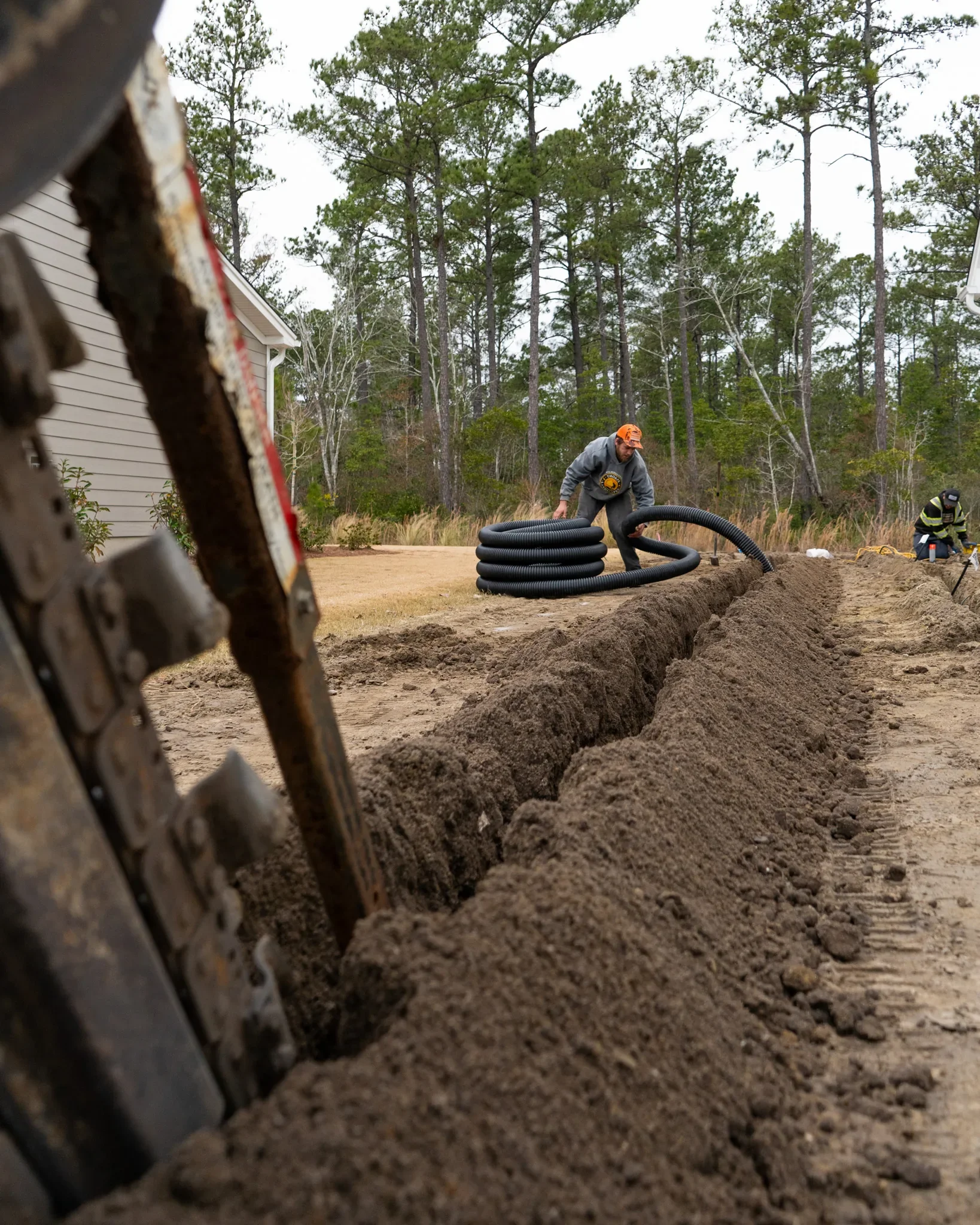
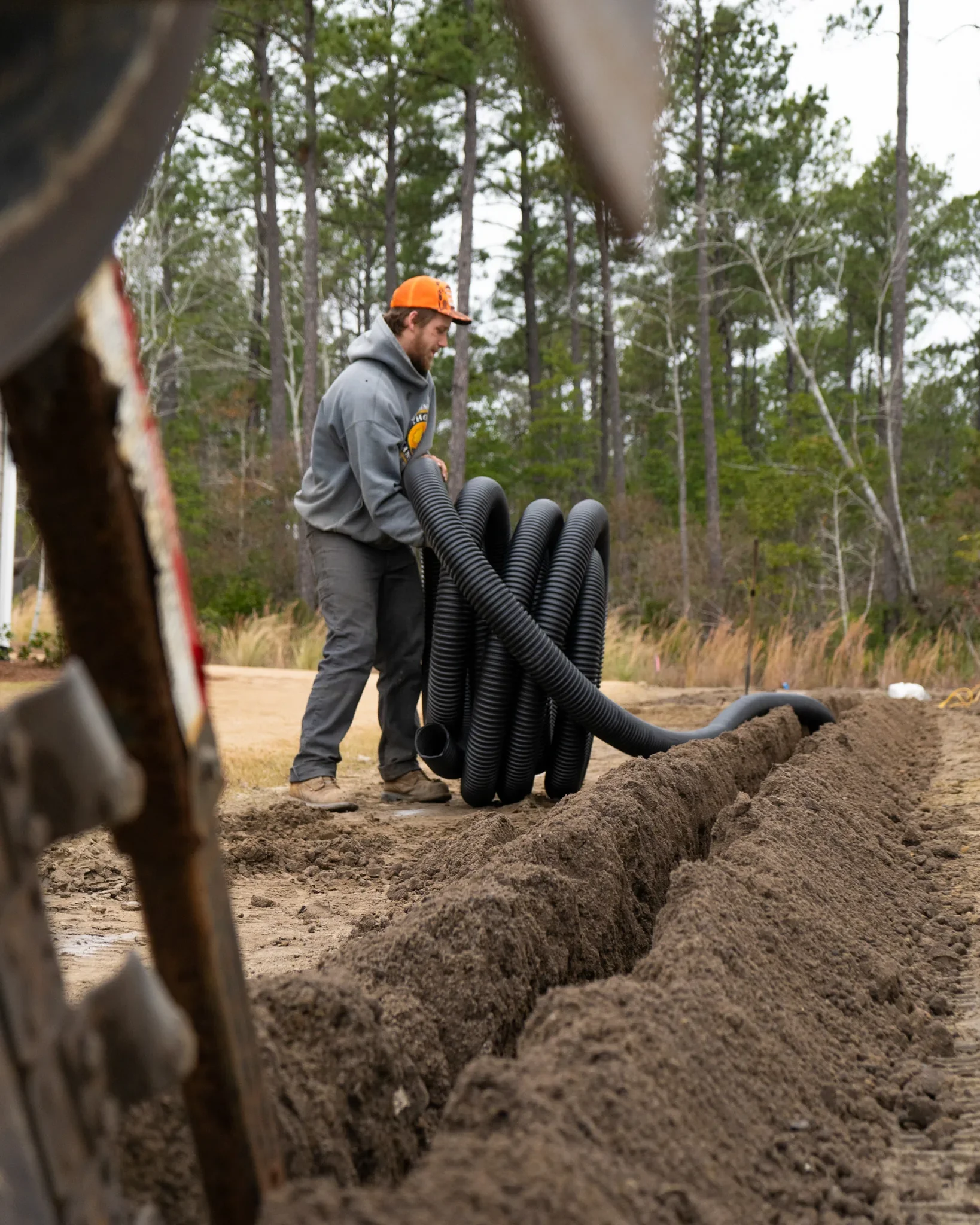
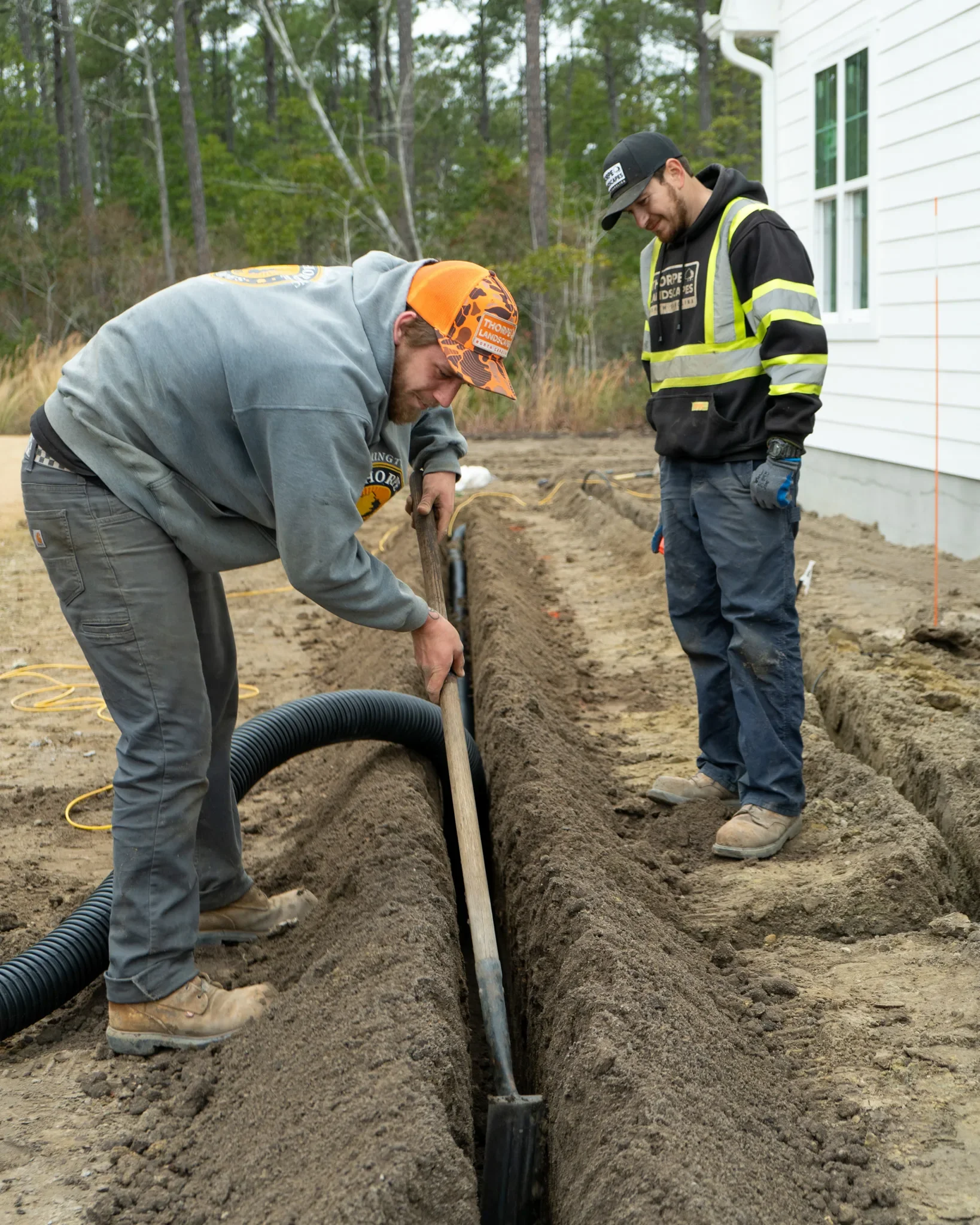
1. Interceptor and French Drains: Catching Water Uphill of the House
Best for: water running downhill toward the foundation, a driveway or a wall; soil that stays saturated on the uphill side of anything.
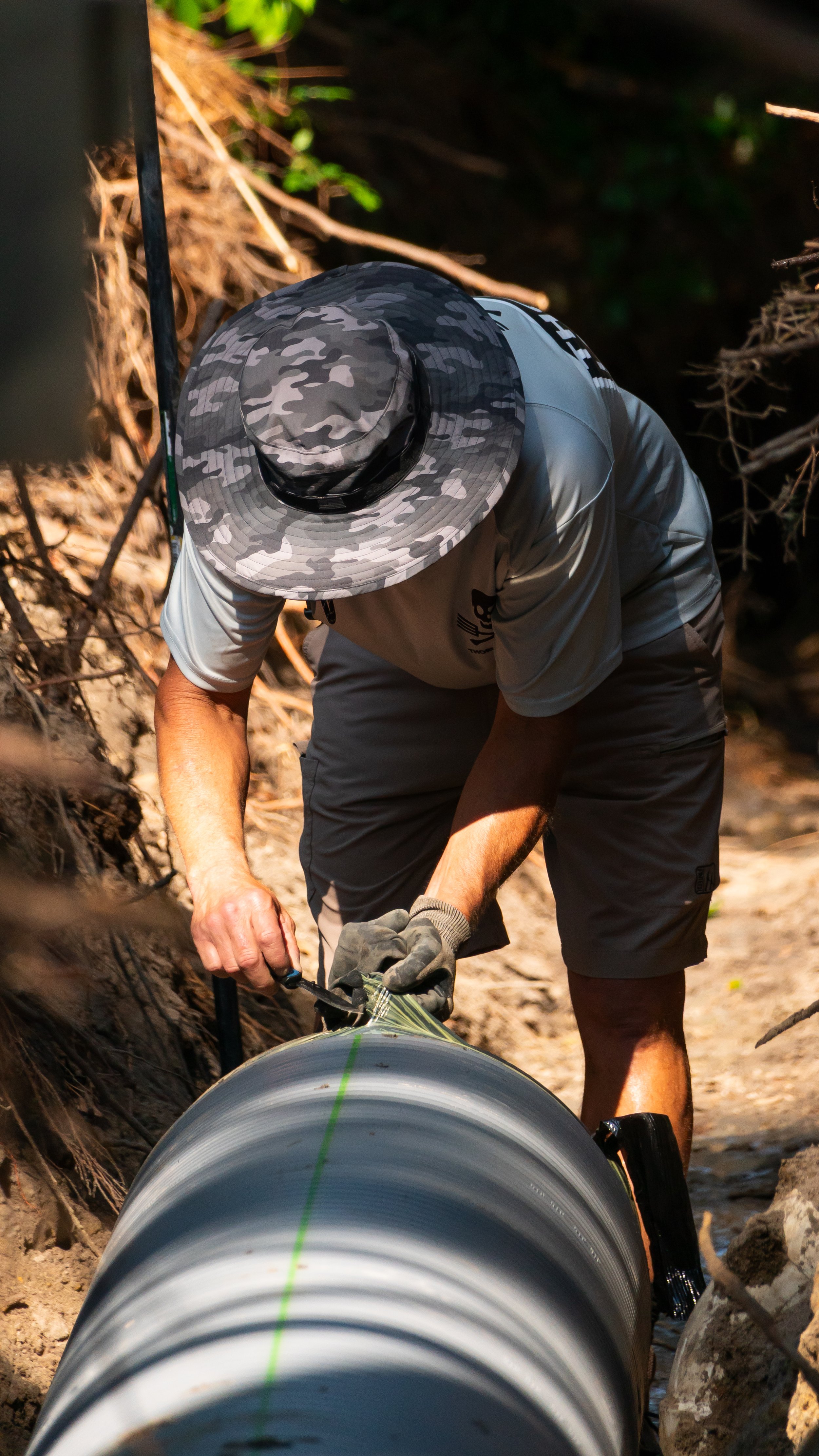
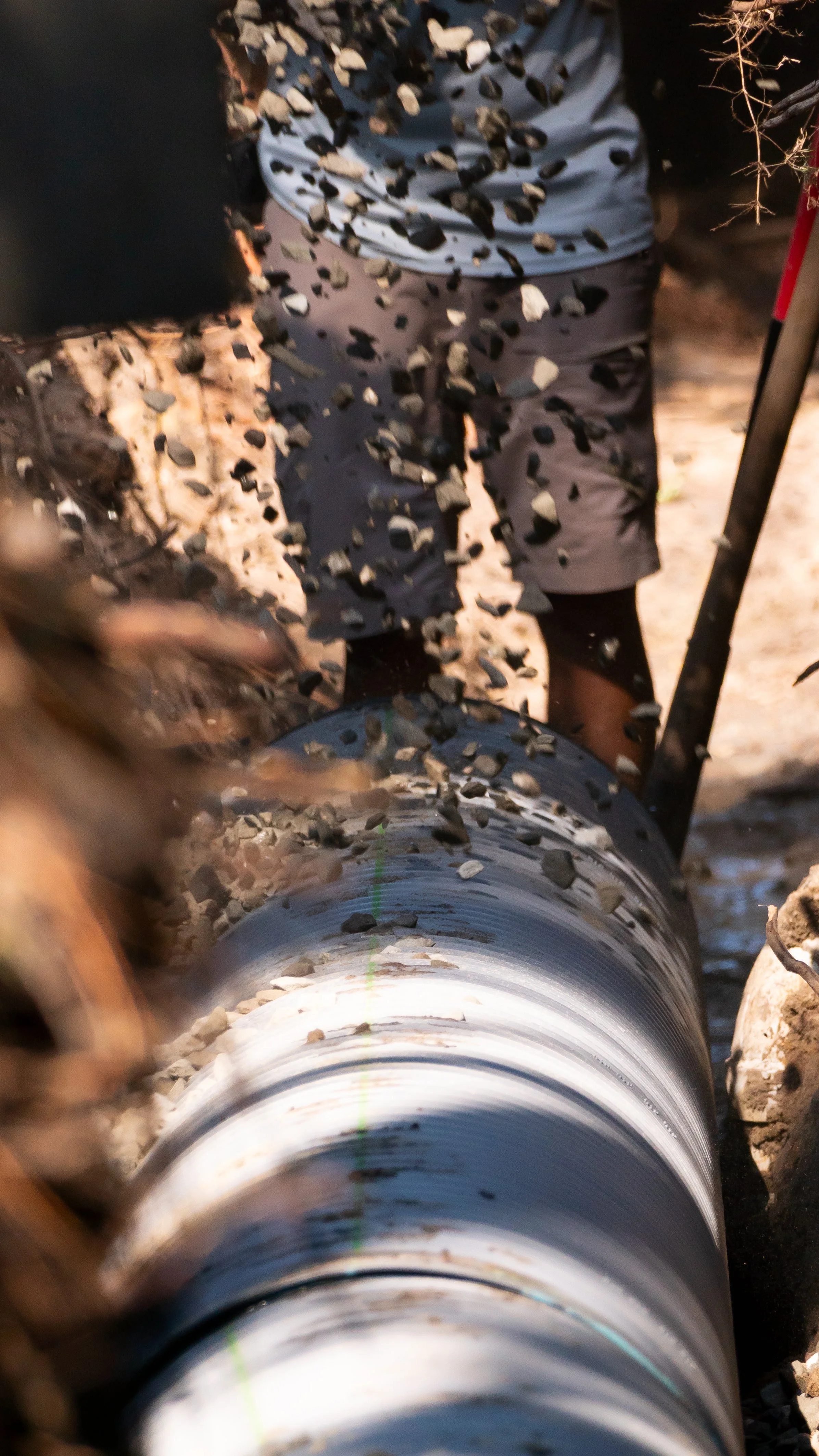
What it is: a French drain is perforated pipe set in clean gravel, wrapped in filter fabric, and pitched to a discharge point. On a slope we place it across the grade, uphill of the thing we are protecting, so it intercepts water moving through the soil before it arrives. An interceptor drain does the same job for surface water, with a grate or channel at the top.
Why it is the mountain workhorse: it solves the problem at the source. Instead of bailing water out at the foundation, the drain catches it thirty feet up the hill and routes it around. Sized correctly to the slope feeding it and pitched to daylight, it keeps working for years without silting up. This is the most requested fix we install in Western NC, and it is the backbone of most of the systems below. See how we build French drains in Asheville for the full method.
2. Regrading and Swales: Giving Water a Path Around
Best for: sheet flow across open ground, water aimed at the house, low spots at the bottom of a slope.
What it is: regrading reshapes the surface so water is steered where you want it. A swale is a broad, shallow channel, usually grassed, that carries runoff downhill along a route you chose instead of the one gravity picked. On a mountain lot we often pair the two: the swale moves what is on top, a French drain beneath it handles what is soaking in.
Why homeowners like it: it disappears once the grass grows back, it protects patios, beds and foundations all at once, and it fixes the root cause rather than a symptom. On steeper ground a swale needs to be built with the right cross-section and pitch or it becomes the gully it was meant to prevent, which is where experience on slopes earns its keep.
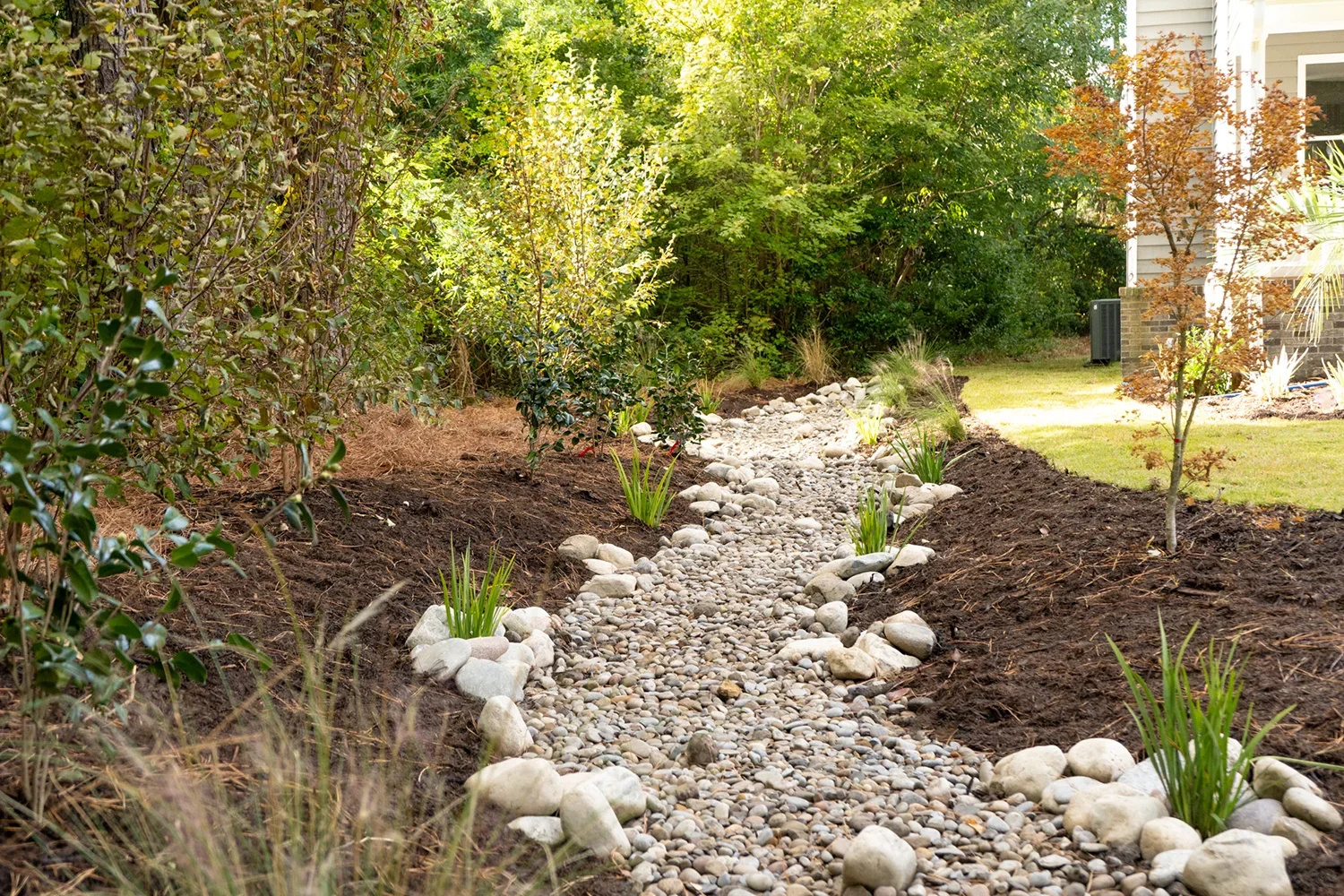
3. Dry Creek Beds on a Grade: Drainage That Looks Like It Belongs
Best for: visible slopes and erosion channels where you want the fix to look like landscaping.
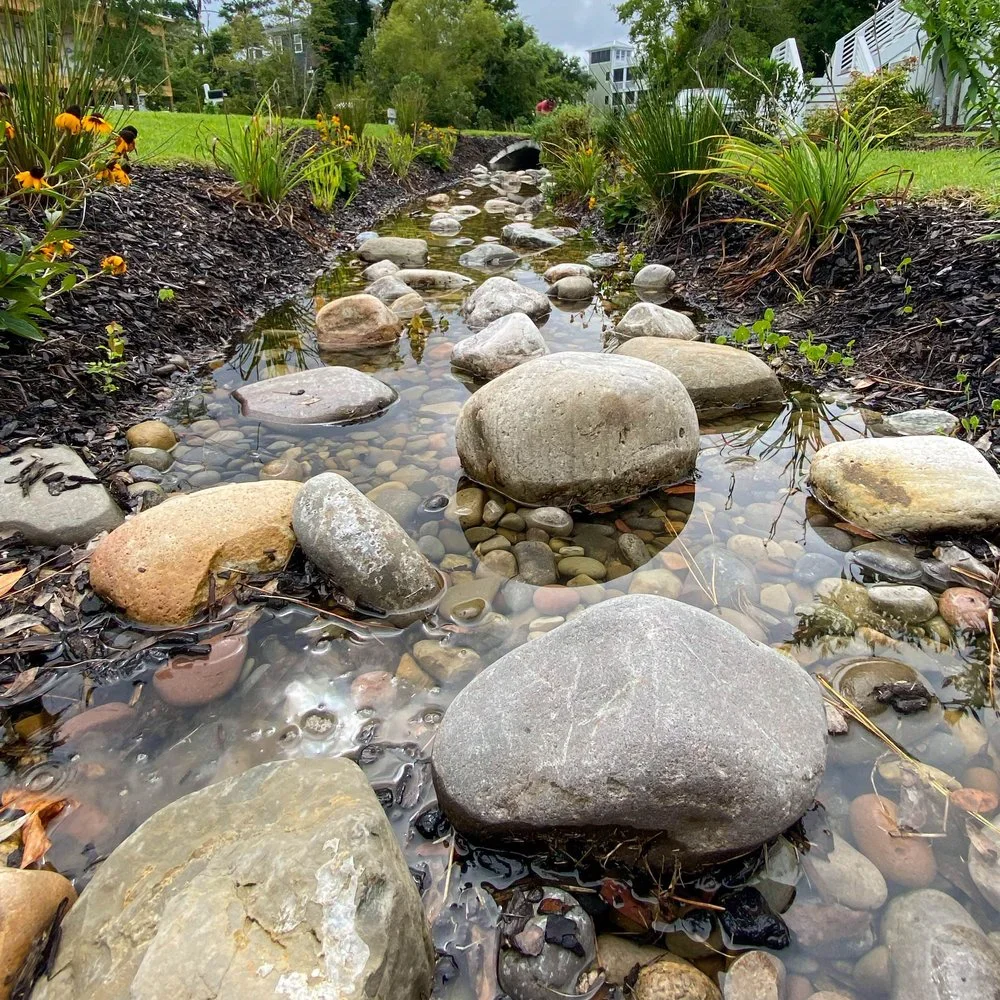
What it is: a stone-lined channel that carries storm water during a rain and reads as a natural feature the rest of the year. On a slope it is built with larger stone and periodic check points to slow the water down, because a creek bed that lets water accelerate just becomes a rock-lined gully. Under the stone we can tie in pipe and catch basins to boost capacity.
Why it works in the mountains: it handles the big bursts that swales alone cannot, it holds soil in place on the channel banks, and with Blue Ridge fieldstone it is often the best-looking part of the yard.
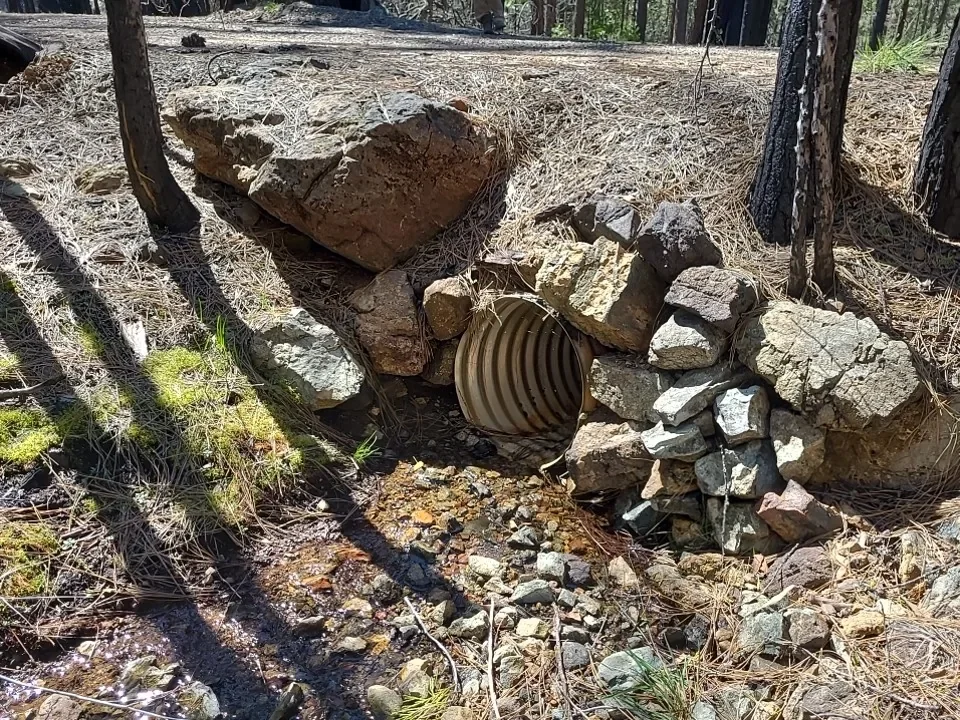
4. Culverts, Driveway Crossings and Catch Basins
Best for: driveways that cross a drainage path, roadside runoff entering the property, low collection points that flood.
What it is: a culvert carries water under a driveway or across a grade without washing it out. Catch basins collect water at low points and at the bottom of slopes and connect to buried pipe that carries it to a safe outlet. Downspout tie-ins put roof water into the same system instead of dumping it at the corner of the house.
Why it matters here: long mountain driveways almost always cross the natural path water wants to take. An undersized or missing culvert is the number one reason a driveway washes out every big storm. Getting the crossing sized right, and keeping roof water out of the same channel, is one of the highest-value fixes on a WNC property.
5. Erosion Control and Rain Gardens: Holding the Slope Together
Best for: bare or eroding slopes, cut banks, areas below a downspout or drain outlet that keep washing out.
What it is: coir logs and bio-logs staked across the slope to slow water and catch soil, replanting with deep-rooted native plants to hold the grade, and rain gardens designed to hold and absorb runoff rather than send it downhill. Our rain gardens are designed by an NC Rain Garden Professional (Certification #372).
Why it belongs in a drainage plan: pipes move water; plants and logs stop the soil from going with it. On a steep lot the two have to work together. And when a slope needs holding as well as draining, the drainage gets built into the wall system from the start. Our Asheville retaining and boulder wall pages [link: Asheville retaining walls page, CONFIRM URL] cover how that works.
Every slope is different, and the only way to know which of these you need is to walk the grade in person. Book a free on-site drainage consultation in Asheville and we will map where the water enters and exits before recommending anything.
Matching Symptoms to Solutions
| What you are seeing | Likely solution mix |
|---|---|
| Water runs downhill straight at the house | Interceptor or French drain uphill + swale or pipe around the foundation |
| Driveway washes out or floods at a low crossing | Properly sized culvert + catch basin, keep roof water out of the channel |
| A gully is cutting into the slope and getting deeper | Dry creek bed with check points + erosion control + replanting |
| Bottom of the lot stays soggy, top is dry | Regrading + French drain at the toe of the slope with a daylight outlet |
| Retaining wall is bulging, leaning or weeping | Drainage behind the wall, often rebuilt into the wall system |
| Patio or walkway heaves every winter | Subsurface drainage to pull water out before it freezes |
| Roof water dumps at the corner of the house | Downspout tie-ins to buried pipe, discharged downslope |
| Bare slope below a drain outlet keeps eroding | Energy dissipation at the outlet + coir logs + native replanting |
You do not need to know the fix before you call. The important thing is recognizing that a slope problem that comes back after every storm is a drainage issue, not a landscaping or mowing issue
Pro Tips From 15 Years on WNC Slopes
Walk your property during a hard rain, once, with a phone camera. Where water enters, where it speeds up, and where it exits tells us more than any dry-day inspection. Bring the video to the assessment.
Check your culvert before leaf season, not after. A driveway crossing that is half-blocked by September will be fully blocked by the first November storm.
Never discharge a drain onto a neighbor's slope or into a gully you do not own. On a mountain lot the outlet matters as much as the intake, and it is where most DIY systems go wrong.
If ice forms in the same spot every winter, mark it in October. That patch is the visible end of a water path we can trace uphill.
Plant the slope after you drain it, not instead of draining it. Roots hold soil, but they cannot stop a sheet of water. Our Asheville fall planting guide covers what to put on a slope this fall once the drainage is in.
On the coast the same problems look different. If you are comparing notes with someone at the beach, our Wilmington drainage guide explains why the fixes are not interchangeable.
What to Expect From a Thorpe Drainage Assessment in Asheville
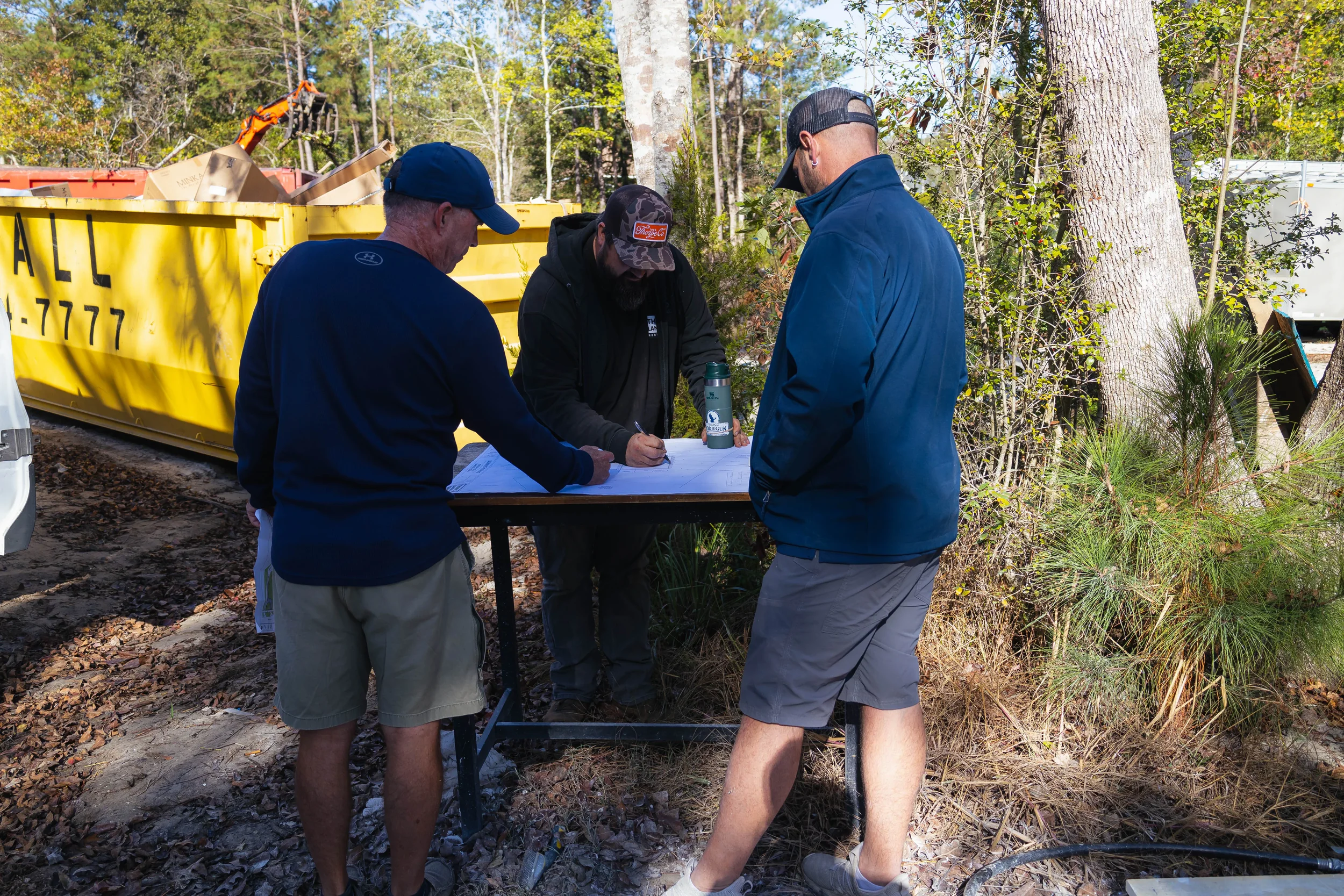
When you book a drainage consultation with our Asheville crew, here is what actually happens:
We walk the slope with you. You show us where water arrives, how fast, and what it has damaged.
We read the grade, soil and outlets. Where water enters the property, where it wants to go, where it can safely leave.
We check the risk points. Foundations, driveway crossings, wall bases, patios and anything downhill of a downspout.
We recommend one or two options, usually a combination like an interceptor drain plus a swale, or a culvert plus catch basins.
You get a written proposal with the plan, the interception points and a firm price before any work starts. Permits are pulled in-house, and most drainage builds take one to three weeks.
Frequently Asked Questions
What is the difference between a French drain and a swale on a slope?
A French drain is buried perforated pipe in gravel that pulls water out of the soil. A swale is a shaped surface channel that carries runoff downhill. On a mountain lot we often use both: the swale handles what is on top, the French drain handles what is soaking in.
Water runs down the hill straight at my house. Can that be fixed?
Yes, and it is the most common mountain drainage problem we solve. We intercept the water uphill of the house with a French or interceptor drain, then carry it around and past the foundation in a swale or piped line that discharges safely downslope. The fix is catching it before it reaches you, not bailing it out after.
Does freeze-thaw really affect drainage in Asheville?
It does. Soil that holds water expands when it freezes and heaves the ground above it, which is why poorly drained slopes shift, walls lean and patios lift over a WNC winter. Subsurface drainage pulls the water out before it can freeze and move things.
Is fall a good time to do drainage work in the mountains?
It is one of the best. The ground is workable, the fall storms show us exactly where the water goes, and a system installed in September or October is in place before the freeze-thaw season starts doing damage. The other good window is late winter into March, ahead of spring rains.
Ready to Stop Water Before It Reaches Your House?
Thorpe Landscapes of Asheville has designed and built drainage on Western NC slopes for 15 years: French and interceptor drains, culverts, swales, dry creek beds, rain gardens and erosion control, engineered for mountain terrain and freeze-thaw. NC GC License #100844, NC Stormwater BMP Certified, permits handled in-house. Book a free on-site consultation and we will walk your slope with you.