
Do You Need A Drainage Upgrade in Wilmington NC? (French Drains, Swales & More)
Living in Coastal North Carolina is wonderful, but being a home owner in this region comes with challenges. Like what to do with your backyard if it turns into a sponge after every storm?
Wilmington gets about 58 inches of rain a year, well above the U.S. average. Add in coastal storms, hurricanes, and heavy downpours, and it’s easy to see why having a good drainage system can save you some peace of mind and money.
The good news: you do not have to live with a soggy yard or water creeping toward your foundation. The right drainage solution, designed for coastal North Carolina soils, can dry out trouble spots and protect your home long term.
In this blog, we will walk through:
Common signs your yard needs drainage help
The backyard drainage solutions we use most in Wilmington and New Hanover County
How to match your symptoms to the right fix
What to expect from a professional drainage assessment
Do you actually need drainage work? A quick check list
If you notice one or more of these, it is a sign you might need professional yard drainage:
Water that sits in the same low spot for more than 24–48 hours
Mushy grass that never really dries out
Water running toward your foundation, crawlspace, or garage
Mulch, gravel, or soil washing out after every heavy rain
Standing water along fence lines or property edges
A side yard where grass refuses to grow because it stays too wet
Musty smells or moisture in the crawlspace after storms
If you answered “yes” to two or more of these, you’re not just dealing with “bad grass.” You’re dealing with how water moves through your property, and that’s where a drainage contractor comes in.
Why drainage is different in coastal North Carolina
Backyard drainage in Wilmington and Hampstead is not the same as in a flat, dry suburb.
A few local realities that matter:
High annual rainfall. Wilmington averages around 58 inches of rain a year, compared to about 38 inches nationally.
Intense downpours. Tropical systems and summer storms can drop several inches of rain in a day or two.
Mixed soils and slopes. Some lots have sandy topsoil, others have heavier clay pockets, and many yards have subtle slopes that quietly push water toward the house.
Because of that, “one size fits all” solutions rarely work. The right NC drainage plan is usually a mix of grading, underground piping, and places for water to safely go.
The 4 backyard drainage solutions we use most in Wilmington
Every property is different, but these are the tools we reach for again and again when we design drainage installation in Wilmington NC and nearby coastal communities.
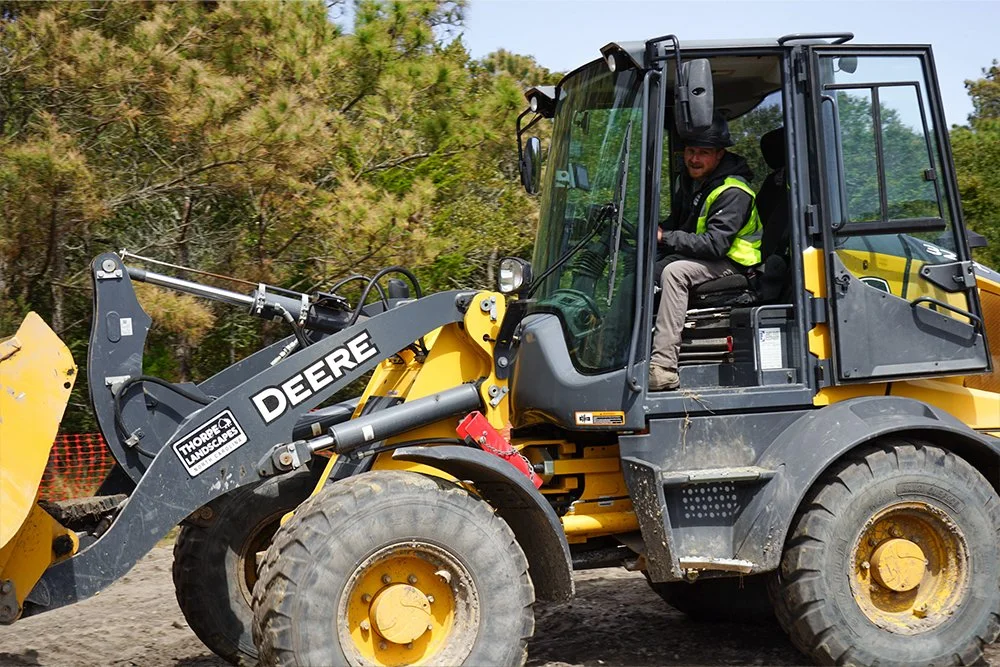
1. Grading and swales: fixing how the yard actually drains
Best for:
Low spots, soggy lawns, subtle slopes pushing water toward the house.
What it is:
Grading reshapes the soil so water flows in the right direction. A swale is a gentle, shallow channel (often grassed over) that guides water toward a safe outlet instead of letting it sit in your yard.
Why homeowners like it:
Invisible once the grass grows back
Solves the “root cause” instead of just treating symptoms
Can protect patios, foundations, and planting beds all at once
In many projects, grading and swales are the foundation that other drainage solutions tie into.
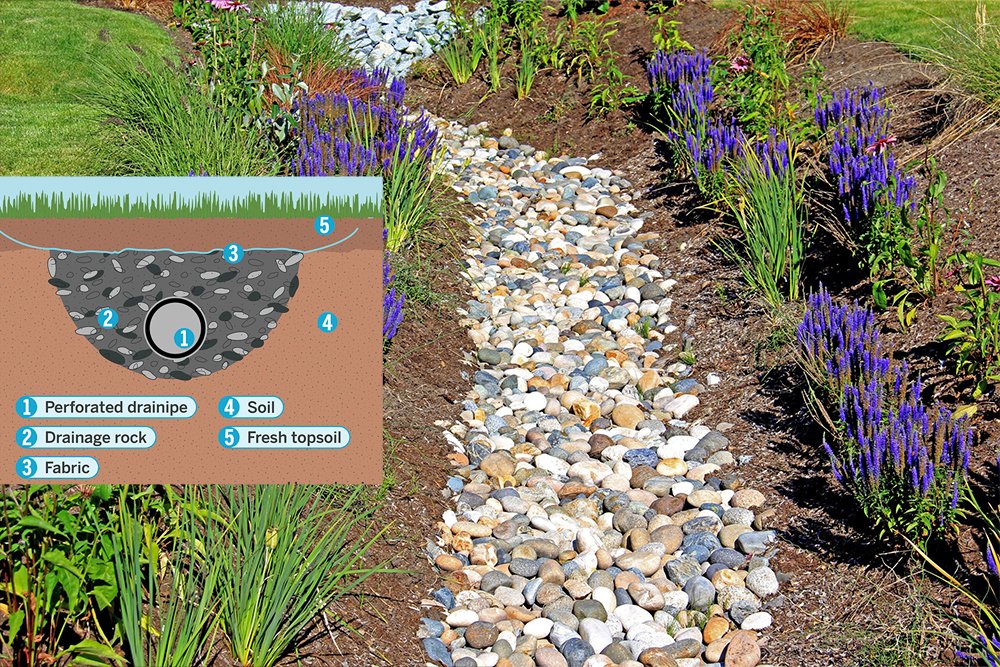
2. French drains: moving water that has nowhere to go
Best for:
Water pooling along foundations, in low back corners, or where the ground stays saturated.
What it is:
A French drain is a perforated pipe buried in a gravel trench. It collects groundwater and surface water along its length and carries it to a safe discharge point, like a lower area, daylight outlet, or dry well.
Ideal for problems like:
Water seeping toward your crawlspace
Constantly soggy zones where grass never dries
Backyards that sit lower than the street or neighbors
Every yard is different, so an on-site assessment is the only way to know what will work best for you. Schedule a free assessment today.
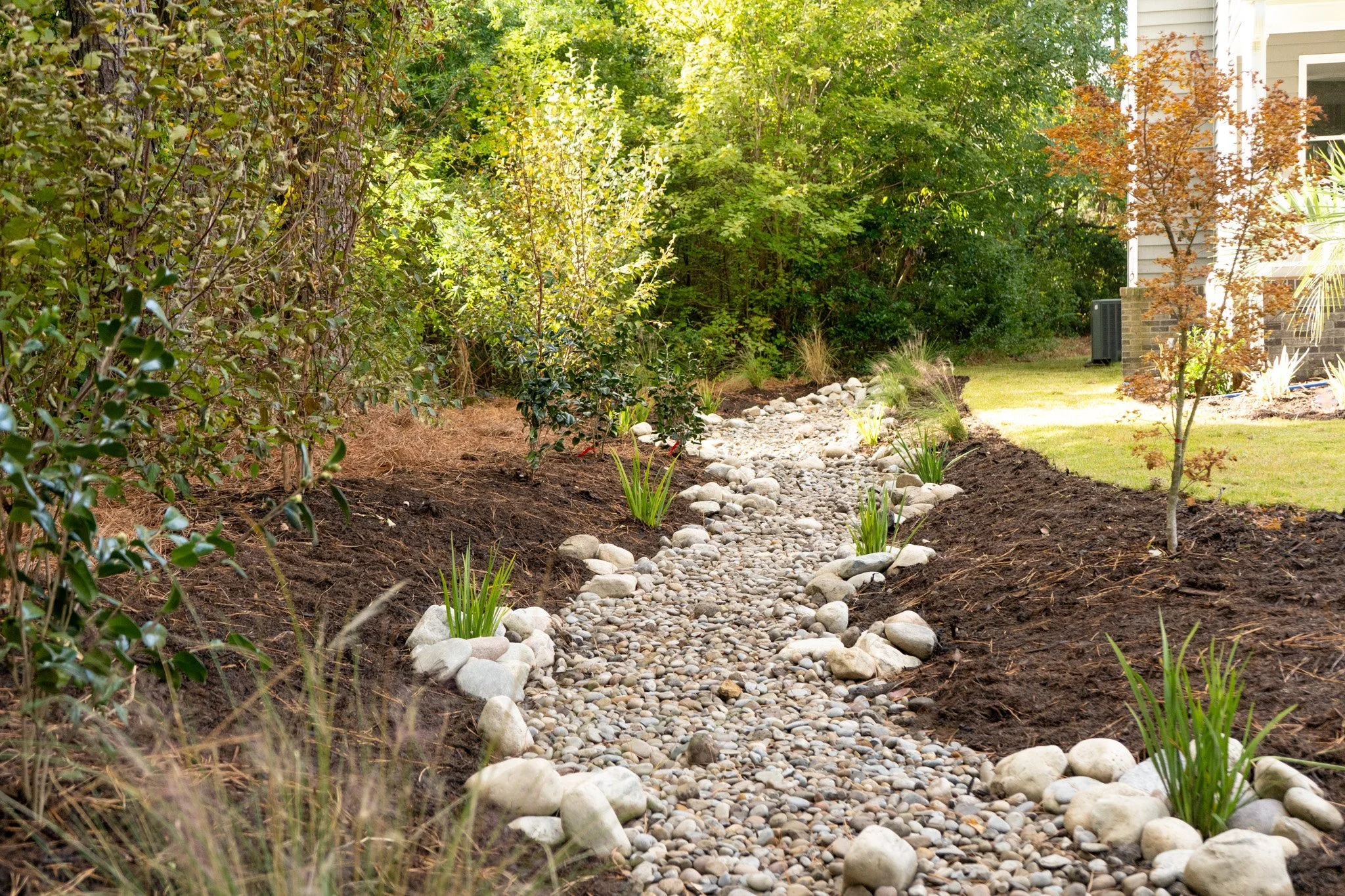
3. Decorative dry creek beds: drainage that looks like landscaping
Best for:
Visible low spots, slopes, or edges where you want function as well as curb appeal.
What it is:
A dry creek bed is a shallow, rock-lined channel that carries water during storms and looks like a natural feature the rest of the time. Under the stone, we can tie in pipe, catch basins, or other components to boost performance.
Why it works well in coastal NC:
Handles big bursts of storm-water
Blends into existing beds and plantings
Can protect bark mulch, turf edges, and patios from washout
If you like the idea of “pretty drainage,” a dry creek bed can be the visible part of a larger drainage system.
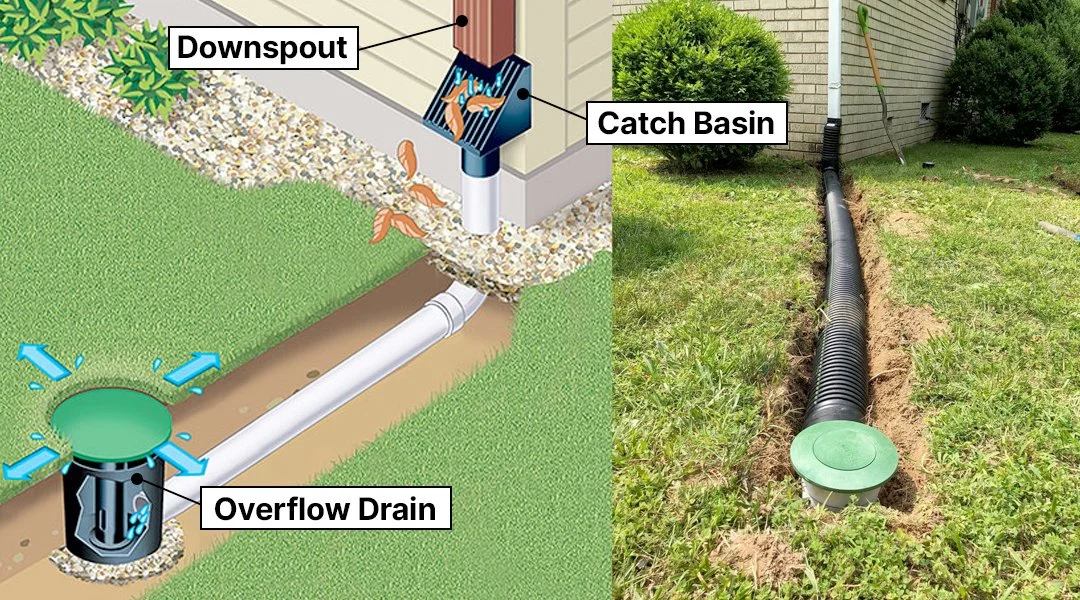
4. Downspout extensions, catch basins, and tie-ins
Best for:
Water pouring out of gutters and straight into beds, walkways, or low turf areas.
What it is:
Downspout extensions and buried pipe carry roof water away from the house.
Catch basins grab water in key spots (like the bottom of a slope or near a patio) and connect to underground piping.
Together, they keep all that roof water from dumping exactly where you walk, park, or relax.
Common fixes we do in Wilmington & New Hanover:
Tie all rear downspouts into a French drain or swale system
Add catch basins in low lawn corners that never dry out
Move water to a safe outlet instead of your foundation or neighbor’s yard
This is often one of the most cost-effective drainage solutions and a great first step for homes without any existing drainage.
Matching symptoms to solutions
| What you are seeing | Likely solution mix |
|---|---|
| Water sits in one low spot after every storm | Grading + swale, possibly a dry creek bed or basin |
| Mushy grass across a big area of the backyard | Grading + French drain |
| Water along the foundation or in the crawlspace | French drain + downspout tie-ins |
| Mulch and gravel washing across your walk or driveway | In-line catch basin + dry creek bed or inceptor-style drain |
| Side yard is always wet and shady, grass will not grow | Swale + grading, maybe a French drain |
| Roof water pours straight into beds or onto concrete | Downspout extensions + buried pipe and catch basins |
You don’t need to know the exact fix before you call us. The important thing is recognizing that repeated water problems are a drainage issue, not a mowing or fertilizing issue.
What to expect from a Thorpe drainage assessment?
When you schedule a drainage assessment in Wilmington here is what we actually do on site:
Walk the property with you. You show us where water sits, how long it stays, and what you are worried about.
Analyze the grades, gutters, and soils. We look at how your yard slopes, where downspouts empty, and how water moves during a storm.
Check risk areas. Foundations, crawlspaces, patios, steps, and steep slopes get extra attention.
Recommend one or two solution options. Often it is a combination, like grading plus a French drain, or downspout tie-ins plus a dry creek bed.
Provide a clear proposal. Scope, materials, timeline, and a budget range that matches your yard and goals.
Most assessments take 30–60 minutes, and projects are scheduled with weather and site conditions in mind. Schedule one today!
Ready to fix your yard drainage?
If you are tired of soggy grass, muddy pathways, or water sneaking toward your foundation, it’s time to look beyond quick fixes and get a real plan in place.
Thorpe Landscapes designs and installs drainage solutions built specifically for Wilmington, Hampstead, and coastal NC weather.
Serving Wilmington, Hampstead, and nearby coastal communities
Experienced with French drains, grading, swales, dry creek beds, and full drainage systems
Licensed, certified, and local to North Carolina
Schedule a drainage assessment and we will help you choose the right solution for your yard, not just the quickest patch.