
Modern Hardscape Design in Asheville: Using Local Stone for Blue Ridge Landscapes
There's something about local stone that imported materials can never replicate.
It matches the bedrock poking through the hillside behind your house. It weathers the same way the mountains weather. It looks like it's been part of your property since before the house was built. And in a place like Asheville, where every property sits on some of the oldest rock formations in North America, the materials for a stunning outdoor space are practically under your feet.
Why Local Stone Works Better in the Mountains
This isn't just about aesthetics. Local stone performs better in Western North Carolina's climate because it was formed in the same conditions it needs to survive.
It handles freeze and thaw. Blue Ridge gneiss and Carolina quartzite have tight, dense grain structures. They resist the water absorption that causes softer imported stones to crack and flake after a few Asheville winters. A stone that's endured millions of years of Blue Ridge weather doesn't flinch at a February freeze.
It matches the land. Every Asheville property has a geological personality. The greys and silvers of local gneiss. The warm buff and rust tones of Crab Orchard flagstone from just across the border in Tennessee. The layered, mossy character of Hoopers Creek stone quarried right here in Henderson County. When you build with these materials, the patio doesn't look like it was dropped onto the hillside. It looks like it grew out of it.
It travels less. Stone is heavy. Shipping it across the country is expensive and slow. When you source from regional quarries like Hoopers Creek Stone in Fletcher or suppliers along the French Broad corridor, you cut lead times, reduce cost, and get stone that your crew has worked with hundreds of times before. No guessing. No surprises at the job site.
The Local Stones We Build With (and When We Use Each One)
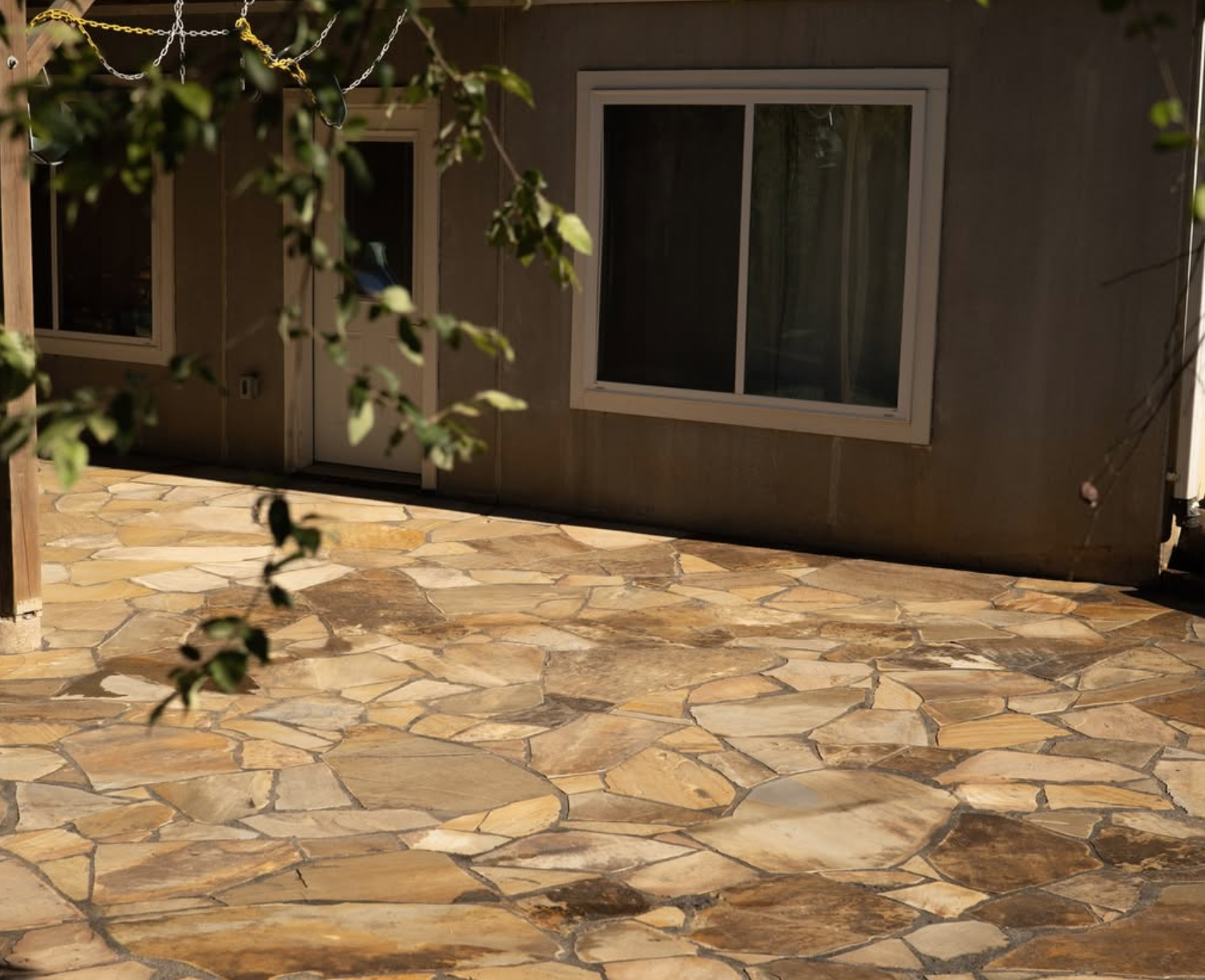
Tennessee Flagstone (Crab Orchard)
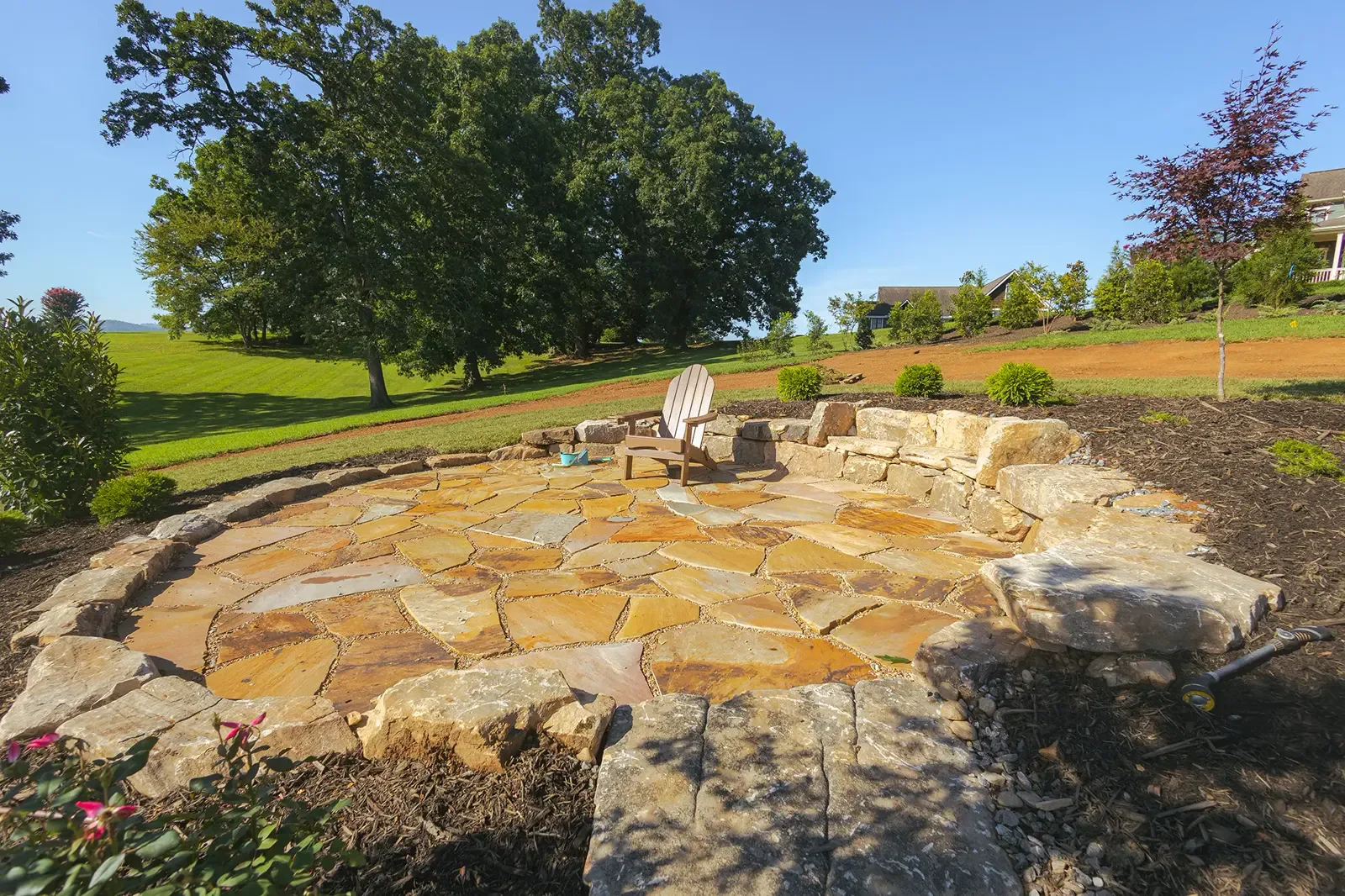
This is our go to patio and walkway stone. Crab Orchard flagstone is a sedimentary sandstone quarried at the top of the Cumberland Plateau in Tennessee, close enough to Asheville to keep sourcing simple.
It comes in three varieties: grey, buff, and variegated. The variegated is the showstopper, with tones that range from off white and tan to pink, rust, and deep brown, sometimes with ripple marks and fossilized textures preserved in the surface. Every piece is different.
Best for: Patios, walkways, stepping stone paths, pool surrounds
Why it works here: Dense grain resists water absorption. The split face edges grip well on sloped surfaces, which matters when your patio sits on a mountainside. Thickness ranges from thin pieces for mortared work up to two or three inches for dry laid installations.
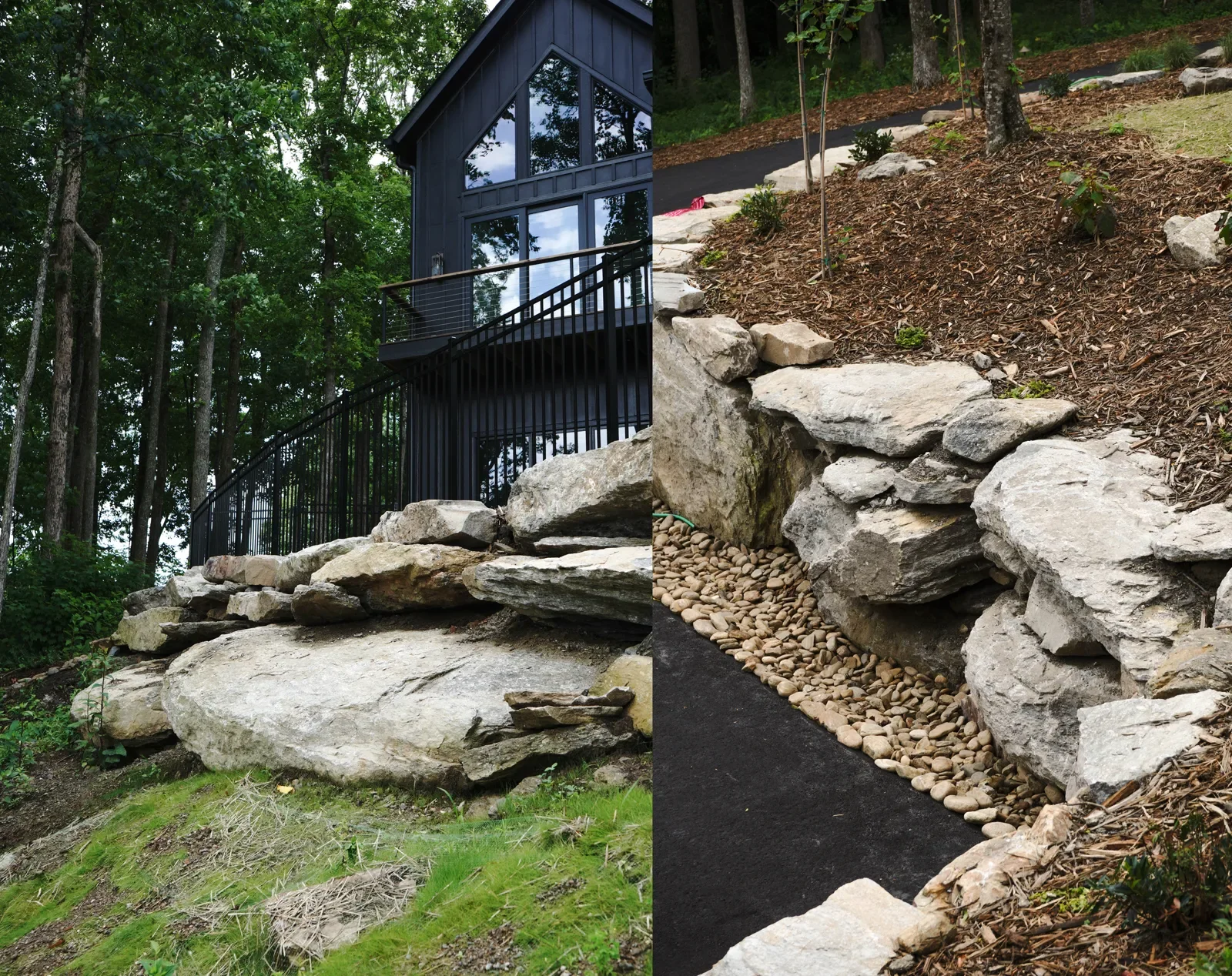
Blue Ridge Gneiss
This is the backbone rock of the Southern Appalachians. Henderson gneiss, found only in the Carolinas, is a metamorphic stone formed over half a billion years ago when molten rock cooled deep beneath the earth's surface and was later transformed by heat and pressure.
It shows up on Asheville properties as exposed outcrops, boulders, and ledge stone. We use it as accent boulders, wall stone, and natural step treads. Its grey and silver tones with occasional bands of quartz and mica give it a texture that looks refined without looking polished.
Best for: Boulder walls, natural stone steps, accent features, fire pit surrounds
Why it works here: It's already here. Literally. On many mountain properties, we incorporate existing gneiss outcrops into the design rather than hauling them away. A boulder that's been sitting on the hillside for 500 million years makes a better seat wall than anything from a catalog.
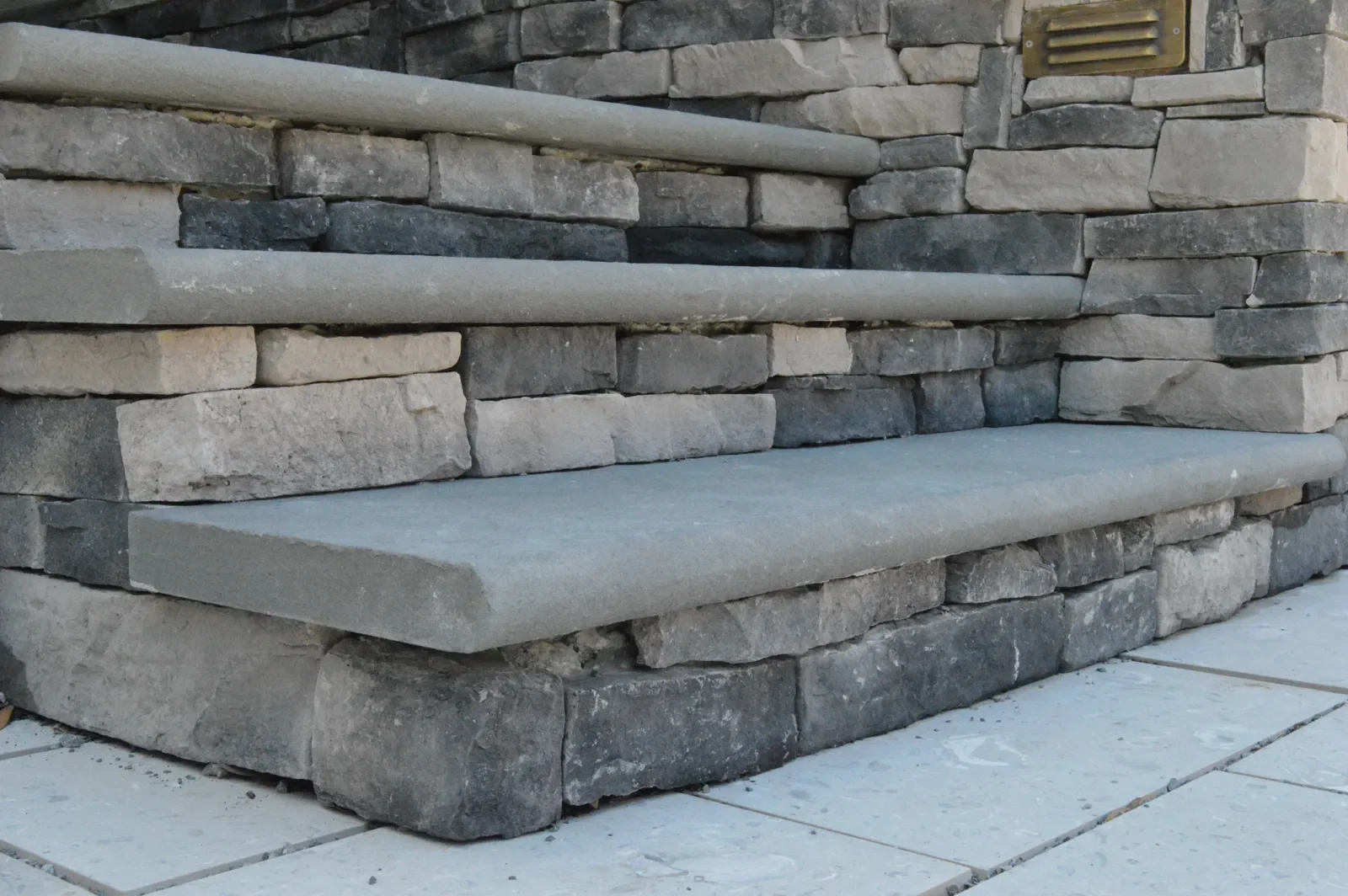
Hoopers Creek Stone
Quarried in Fletcher, just south of Asheville, this granitic stone forms in layers that yield pieces of fairly uniform dimensions. It's a stacking stone by nature, with a pale green mineral that appears on occasional faces, giving it a subtle warmth that distinguishes it from the cooler greys of gneiss.
Best for: Retaining walls, garden walls, raised bed borders, pillar caps
Why it works here: The uniform layering makes it ideal for structural stacking. It's local, so it blends with the surrounding landscape. And because it's quarried just down the road, availability is consistent and lead times are short.
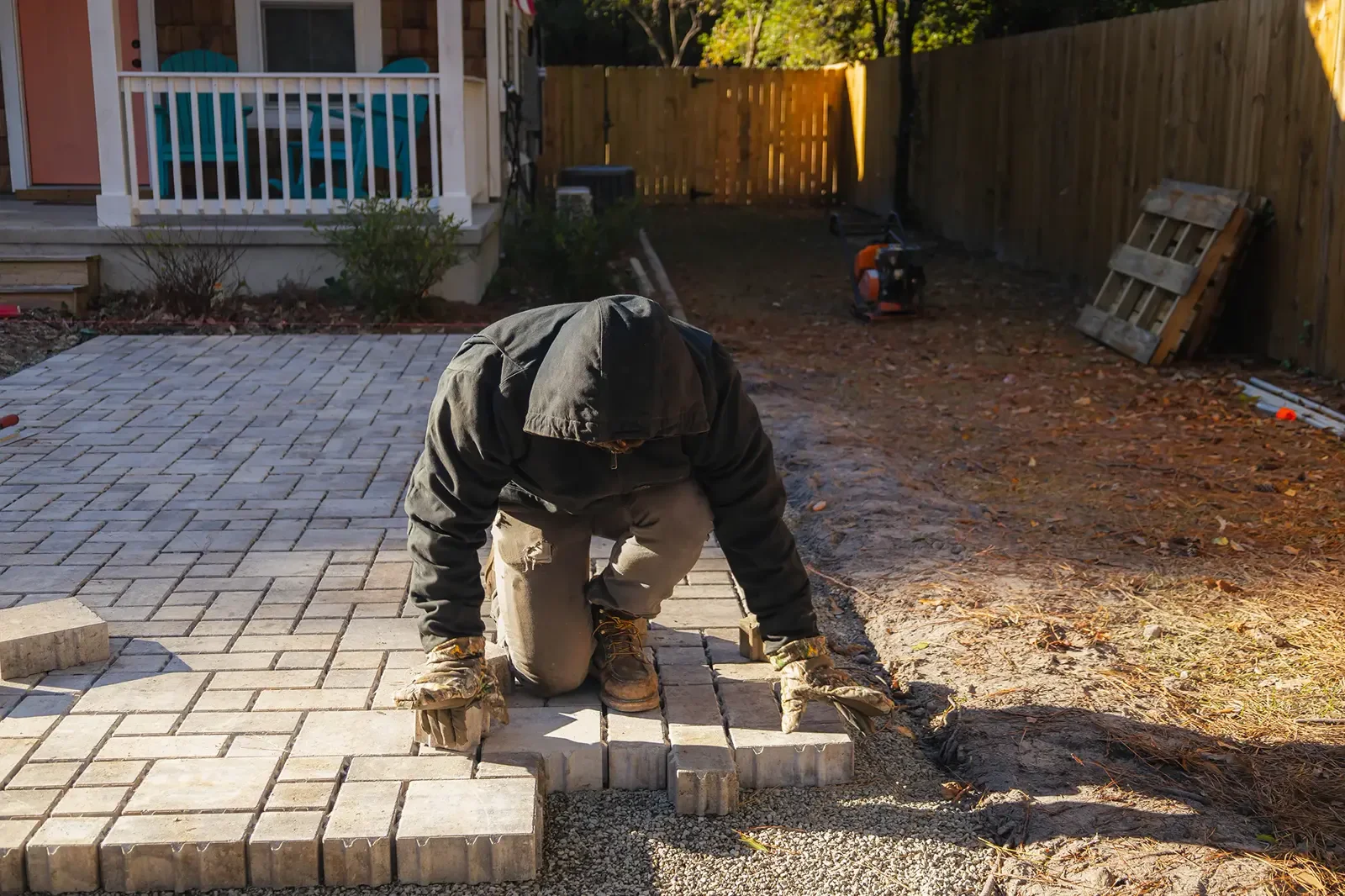
Concrete Pavers (ICPI Rated)
Not every modern hardscape needs to be all natural stone. High quality concrete pavers rated by the Interlocking Concrete Pavement Institute give you modern textures, consistent sizing, and a clean, contemporary look that pairs well with natural stone accents.
Best for: Large patios, driveways, pool decks, outdoor kitchen flooring
Why it works here: Consistent dimensions speed up installation on mountain sites where everything else is unpredictable. Many units are rated to 8,000 psi compressive strength. We often pair concrete pavers as the main surface with flagstone or gneiss borders and accents for a design that feels both modern and rooted in the landscape.
What a Mountain Hardscape Project Actually Looks Like (Start to Finish)
Step 1: Site Assessment
Every mountain property is different. Slope, soil type, drainage patterns, sun exposure, tree root zones, existing rock formations, and access for equipment all affect the design before a single stone is placed.
We walk the property with the homeowner and talk about how they actually want to use the space. What does a Tuesday evening look like out here? What about a Saturday with twelve people over? Where does the water go when it rains for three days straight?
Step 2: Design
Our in house designer creates a layout based on everything we learned during the site assessment. For many projects, we build 3D models so you can explore the space before we break ground. This isn't just a nice visual. It helps us catch potential issues early, like a grade change that needs an extra retaining wall tier, or a drainage path that conflicts with the planned fire pit location.
The design phase is also where we select materials. We'll often bring stone samples to the property so you can see how they look against your home's exterior and the surrounding landscape in actual sunlight, not showroom lighting.
Step 3: Excavation and Site Prep
Mountain hardscapes start with earthwork. On a sloped Asheville lot, that means precise excavation to create level building pads, sometimes terraced across multiple elevations.
For retaining walls, footings go below the frost line. Geogrid reinforcement layers are built in at regular intervals. A 12 inch column of clean drainage stone goes directly behind the wall, wrapped in non woven fabric, with weep holes every six to eight feet. None of this is visible in the finished product. All of it is the reason the finished product lasts.
Step 4: Stone Work
Laying flagstone on a mountain patio isn't the same as laying it on flat ground in Raleigh. Every piece has to account for the slope. Joints need to be tight enough to lock the stone in place but flexible enough to handle seasonal ground movement. The surface pitch needs to carry water away from the house and away from the wall faces at a minimum of two percent grade.
With boulder work, placement is everything. A three ton gneiss boulder doesn't get a second chance at positioning. We use excavators to set major pieces, then hand fit the surrounding stone to make the transition between built elements and natural landscape feel seamless.
Step 5: Finishing and Planting
Hardscape and softscape need to work together. We finish every project with the surrounding landscape in mind: native plantings at wall bases to soften the edges, groundcover between stepping stones, low profile perennials along patio borders that frame the stone without hiding it.
Step 6: Maintenance and Longevity
We stay with the project after the build is done. Sealant needs refreshing every few seasons. Drainage systems need periodic inspection. Plantings need shaping as they mature. A hardscape built for the mountains will last for decades, but only if someone is paying attention to it.
The Details That Separate Mountain Hardscapes from Flat Land Work
If you've gotten quotes from multiple contractors in the Asheville area, here are the questions that separate the ones who understand mountain building from the ones who don't.
Are they accounting for clay soil? If the proposal doesn't mention soil type, base depth, or compaction method, ask about it. Clay is the single biggest variable on most WNC properties.
Is drainage part of the hardscape plan? On a mountain lot, drainage isn't a separate project. It's built into every wall, every patio, and every grade change. If the drainage plan comes as a separate line item from a separate contractor, the two plans may not talk to each other.
What's their spec for retaining walls over four feet? In Buncombe County, walls over 48 inches require engineered plans and a permit. Walls providing more than five feet of vertical relief within 50 horizontal feet need a registered design professional's stamp. Ask to see the engineering.
Do they use 3D modeling? On a complex mountain site with multiple elevations, a flat 2D drawing can miss critical grade changes and spatial relationships. A 3D model lets you and the contractor see potential problems before the excavator arrives.
Where does their stone come from? A contractor who can name the quarry and tell you why they chose that specific stone for your specific site is a contractor who thinks about materials the way a chef thinks about ingredients. If the answer is just "we order from the supply house," dig deeper.
See It for Yourself
If you want to see what local stone looks like when it's designed and built for a mountain property, check out our Mountain Hardscapes portfolio.
Ready to start planning your outdoor space? Contact Thorpe Landscapes for a free consultation.