
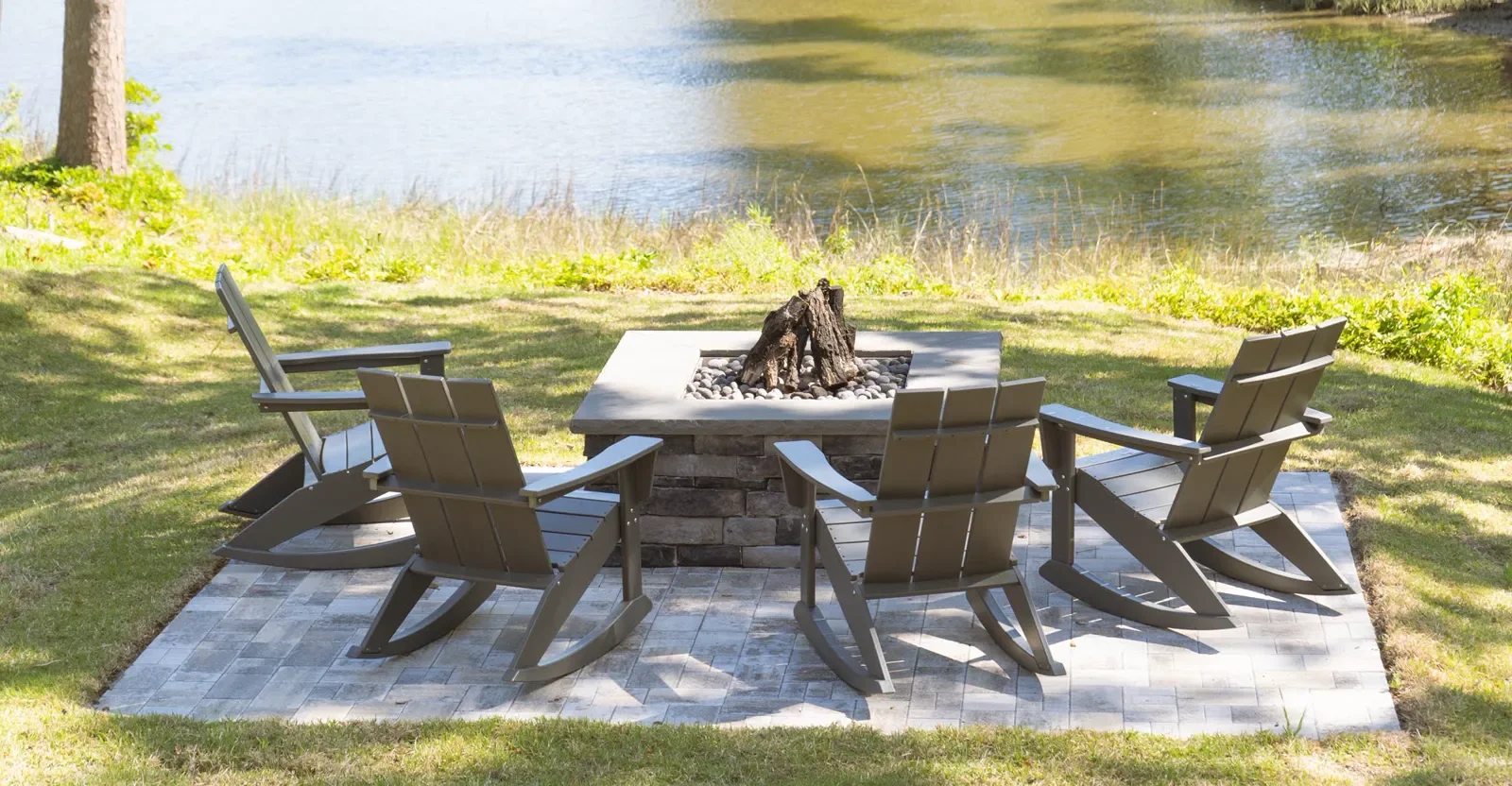
The first cool evening of October hits Wilmington and every homeowner has the same thought: we need a fire pit. A few weeks later it becomes "and honestly, a grill station out here would be nice too."
It's the best time of year to be outside in southeastern North Carolina. The humidity breaks, the bugs back off, and the sunsets over the Intracoastal get ridiculous. But here's what most outdoor living blogs won't tell you: the fire pit and outdoor kitchen that look perfect in a magazine will be rusting, cracking, and fading within two years on Wrightsville Beach.
After 15+ years building outdoor living spaces from Carolina Beach to Figure Eight Island, we know exactly which materials take the salt and which ones don't. Here's the honest guide.
Why Salt Air Destroys Outdoor Features
Salt Spray Is Corrosive Every breeze off the water carries fine salt mist. It settles on metal, wicks into porous stone and stucco, and sits there. Salt pulls moisture out of the air, so the surface stays damp, and salt plus moisture is exactly how rust starts. Oceanfront properties get the worst of it, but anything east of College Road gets a dose, and homes on the sound and Intracoastal see nearly as much as the beachfront.
Sun and Heat Finish the Job Full coastal sun fades painted and powder-coated finishes, dries out sealers, and bakes cheap stucco until it hairline cracks. Those cracks let salt in, and the cycle speeds up.
Humidity Never Lets Anything Dry Inland, a grill gets wet and dries out. Here, it stays damp for days. Anything with a seam, a hinge, or a fastener that isn't marine-grade is on borrowed time.
The good news is that with right materials you don’t have to worry about any of this.
Fire Pits: What Works on the Coast
Gas vs. Wood
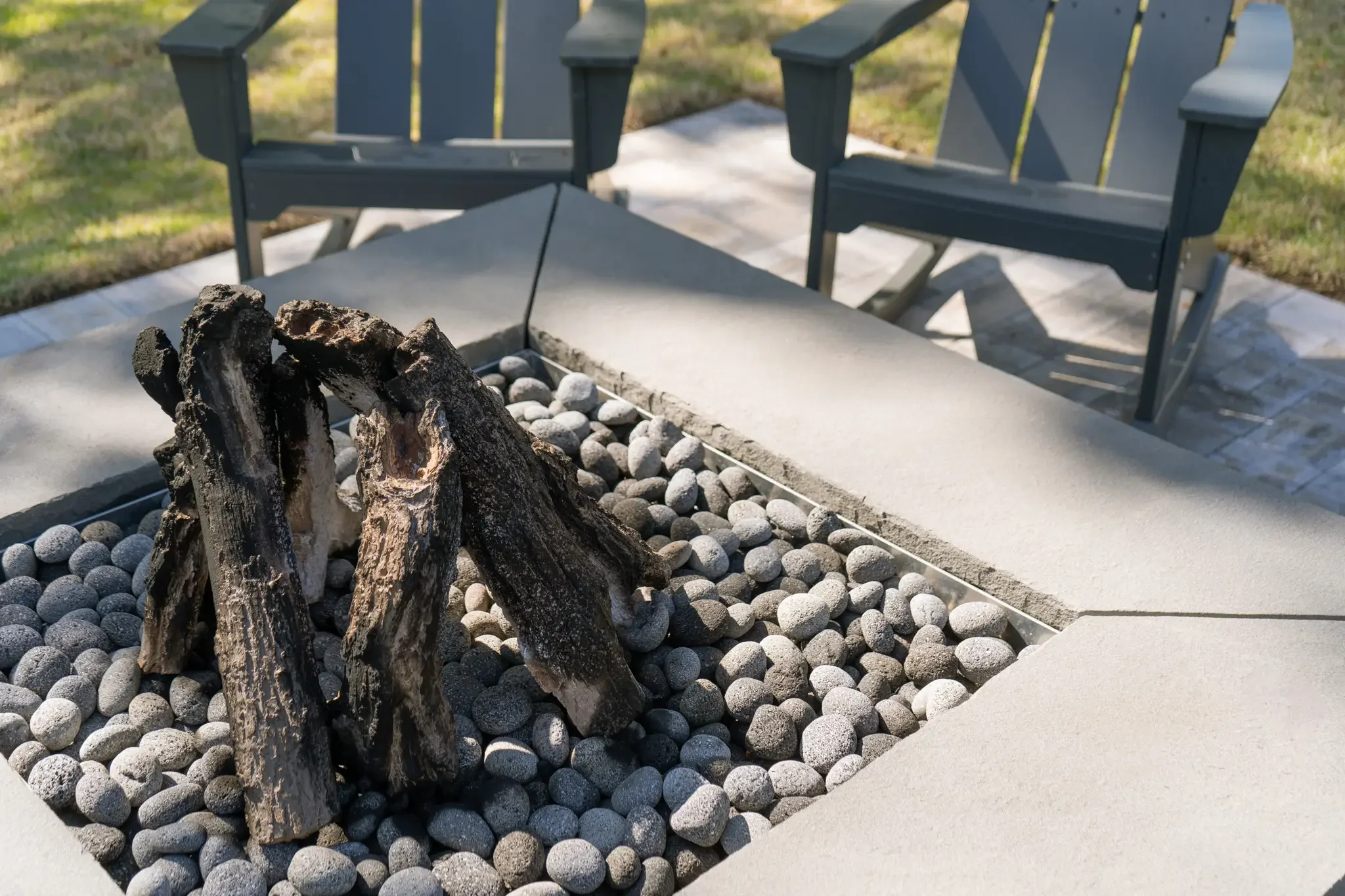
Wood-burning fire pits are the classic choice, and they work great on the coast with one caveat: wind. A wood fire on an exposed oceanfront lot throws sparks and smoke in whatever direction the breeze decides. On sheltered sound-side and inland lots they're fantastic.
Gas fire pits (natural gas or propane) are what we install on most beach properties now, and the trend is accelerating in 2026. They light instantly, produce no sparks or smoke, shut off with a switch when the wind picks up, and don't leave you hauling firewood across a sandy yard. The trade-off is that the burner and valve assembly need to be built for salt air, which brings us to the most important detail.
Our rule: Wood on protected lots where you want the crackle. Gas anywhere the wind is a factor, which on the coast is most places.
The Burner Matters More Than the Fire Pit
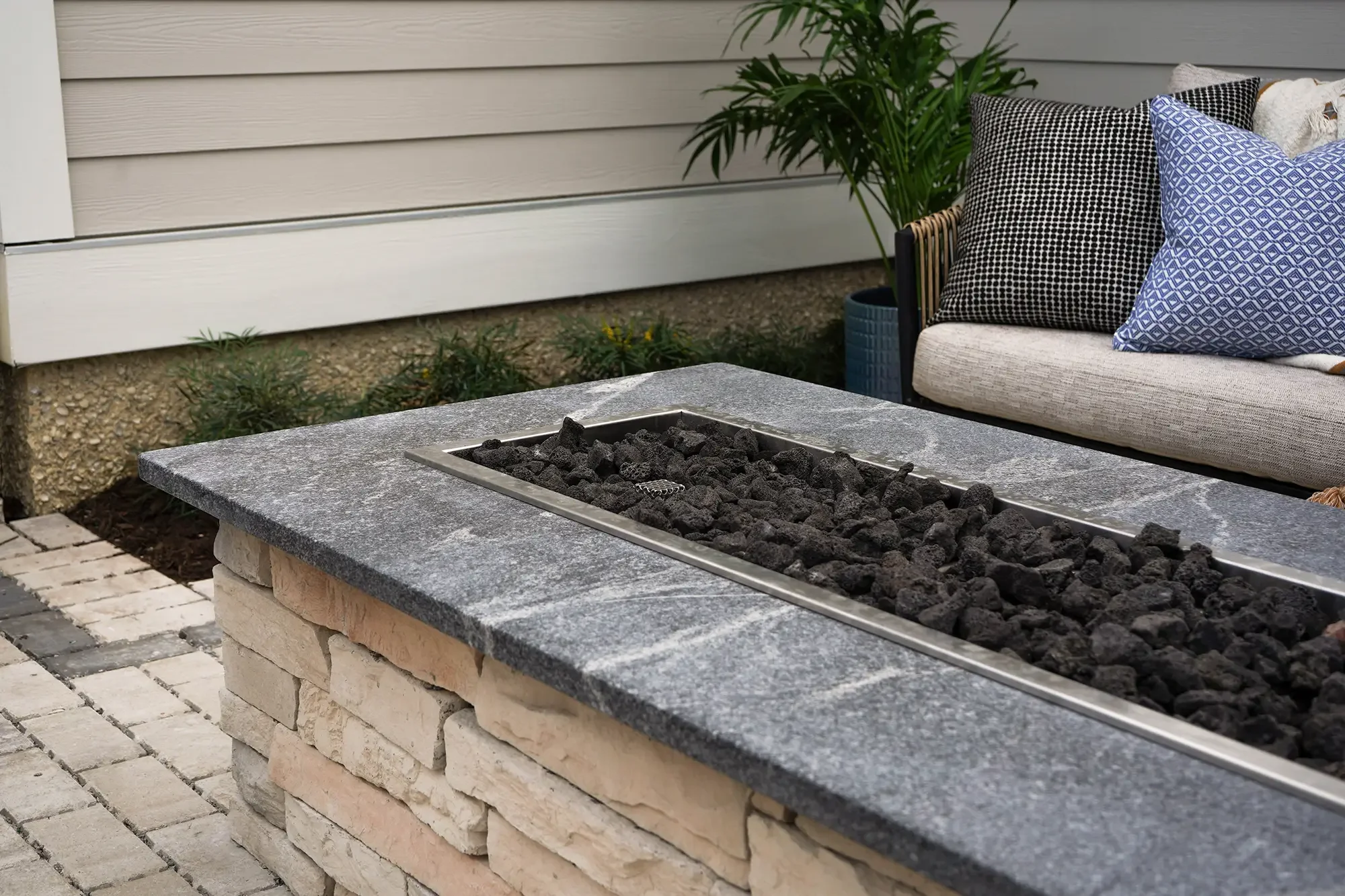
Most fire pit kits come with a stainless steel burner. Not all stainless is created equal. Standard 304 stainless, which is what most products use, will develop rust spots within a season or two at the beach. 316 marine-grade stainless has added molybdenum that resists salt corrosion, and it's the only burner we'll install on an oceanfront or soundfront property. It costs more. It also won't need replacing in three years.
The same goes for the key valve, the ignition components, and any decorative metal rings or covers. Ask for 316 by name.
Fire Pit Surrounds
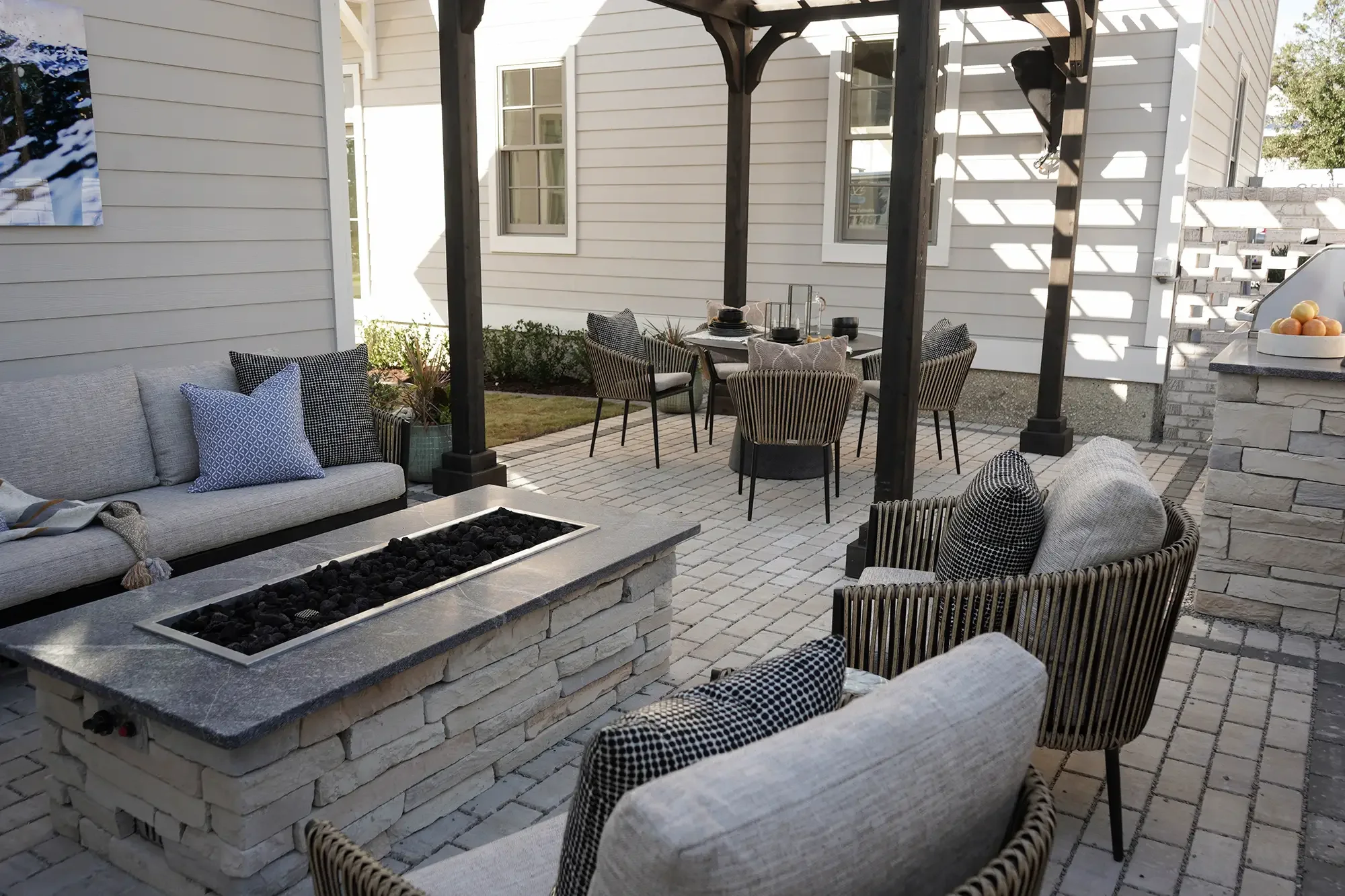
Natural stone veneer is our top choice. Real stone doesn't rust, fade, or absorb much salt. Set over a concrete block core with the right mortar, a stone fire pit will outlast the house.
Concrete block with stucco is common because it's inexpensive, and it can work, but standard stucco hairline cracks in coastal sun and heat cycles, then salt gets in. If you want the smooth stucco look, use an acrylic-modified finish coat rated for exterior coastal use, and plan to inspect and reseal every couple of years.
Precast concrete fire bowls and tables look clean and modern, and quality units hold up well. Look for sealed, high-density precast and avoid anything with exposed steel reinforcement near the surface.
Corten and powder-coated steel bowls are popular inland. Corten is designed to rust on purpose, and on the coast it never stops. Powder-coated steel chips, and once salt reaches the metal under the coating, it rusts from the inside out. We don't recommend either for exposed beach properties.
Pro Tips for Coastal Fire Pits
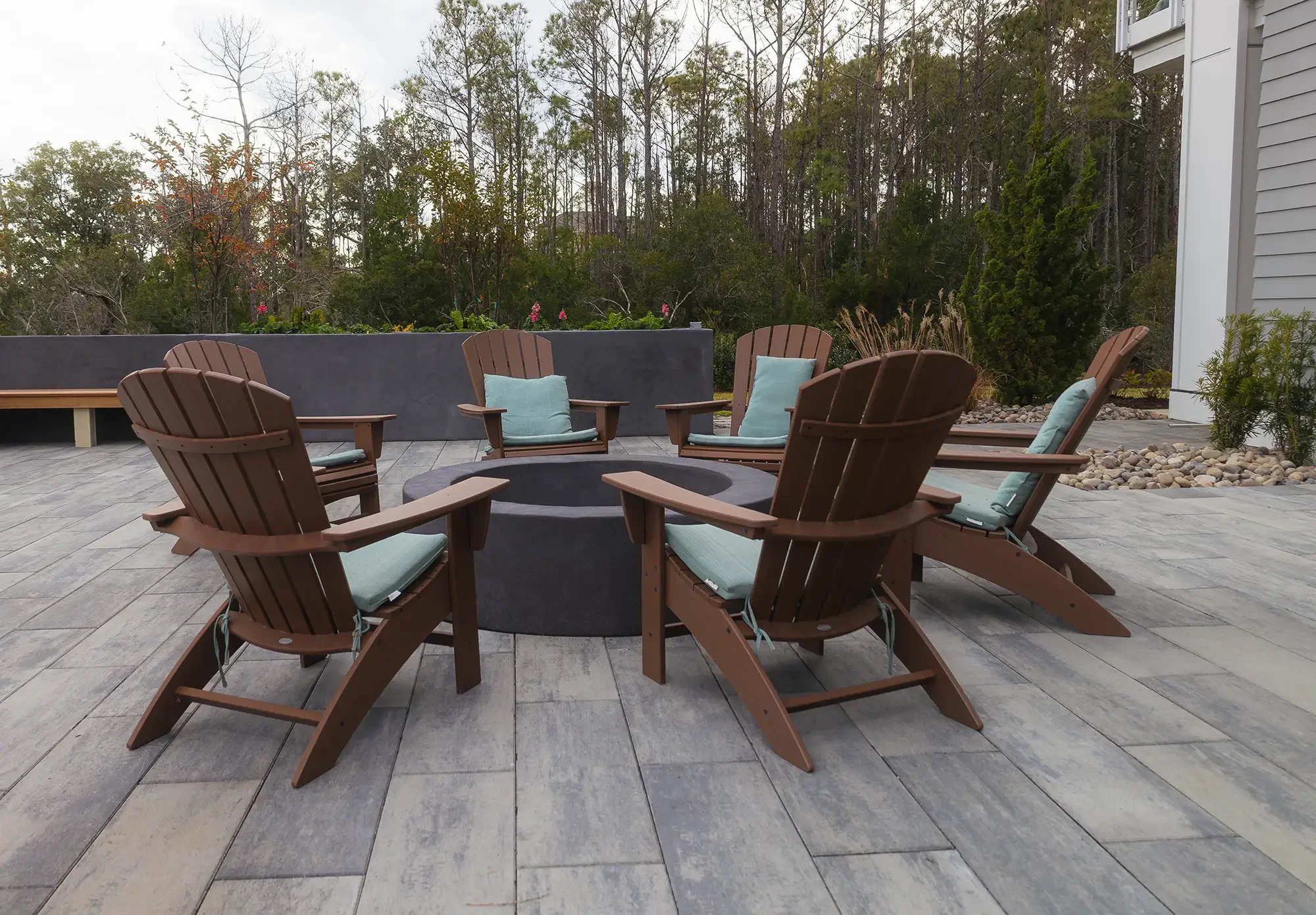
Orient for the wind. Summer breezes here come mostly from the southwest and winter winds from the northeast. We site the seating so prevailing wind carries smoke and heat away from the house and the chairs.
Build in a windbreak. A low seat wall on the windward side, a row of wax myrtle, or the house itself can turn an unusable exposed spot into a comfortable one.
Use a cover. A fitted cover over a gas burner between uses is the single cheapest thing you can do to extend its life.
Rinse after storms. Same advice we give for plants and patios. After a blow with heavy salt spray, hose everything down with fresh water.
Outdoor Kitchens: What Survives at the Beach
Grills and Appliances
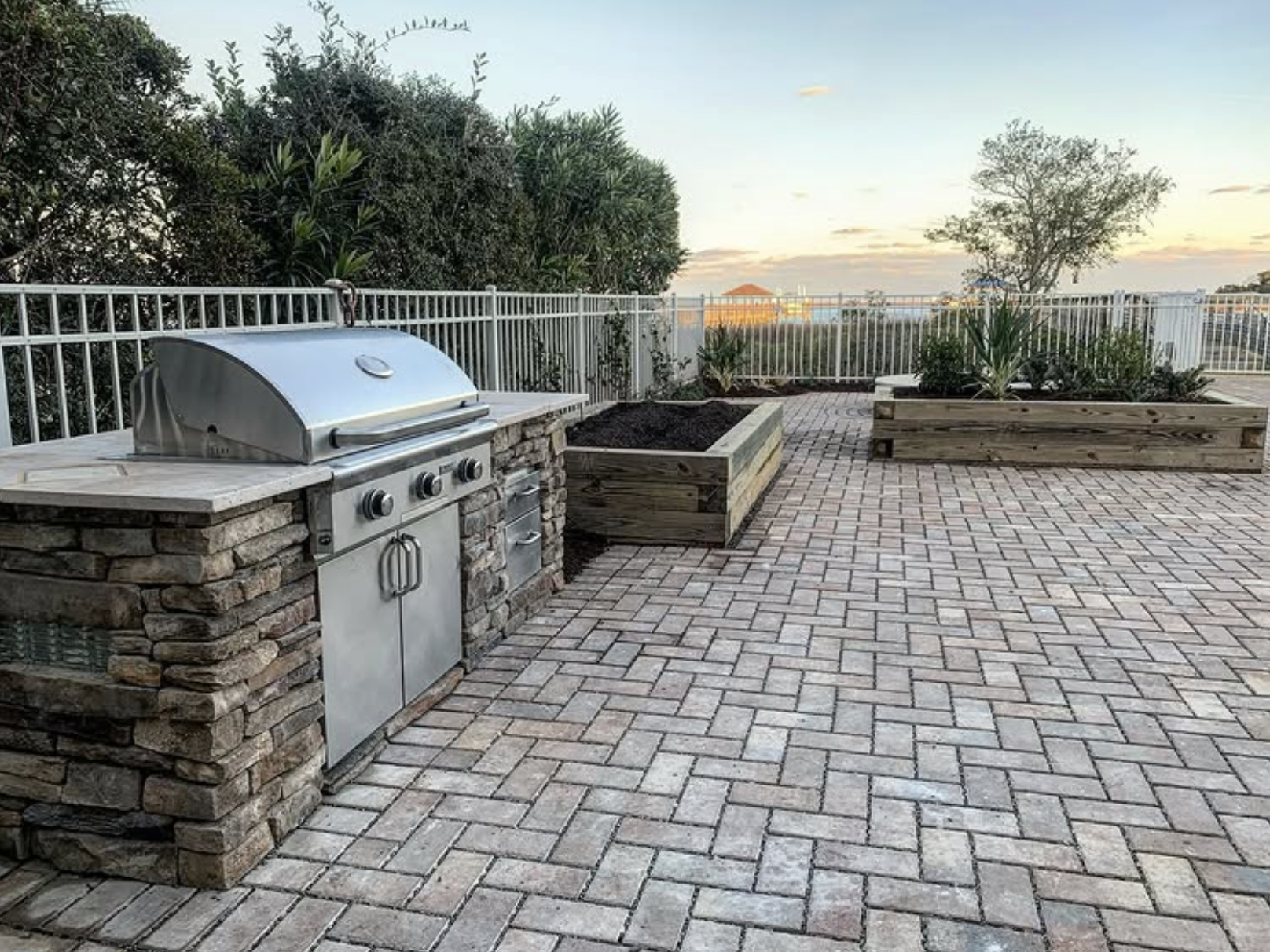
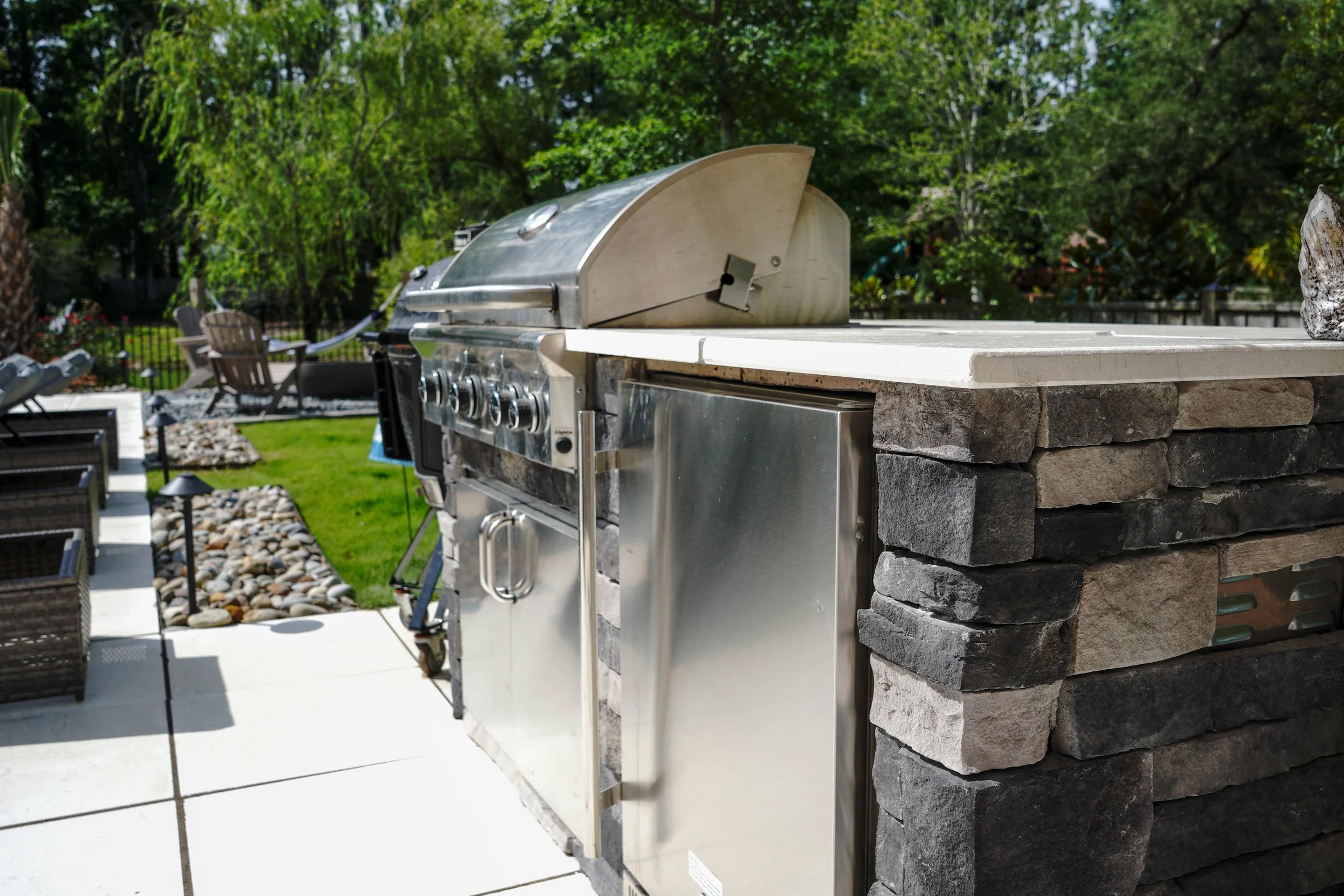
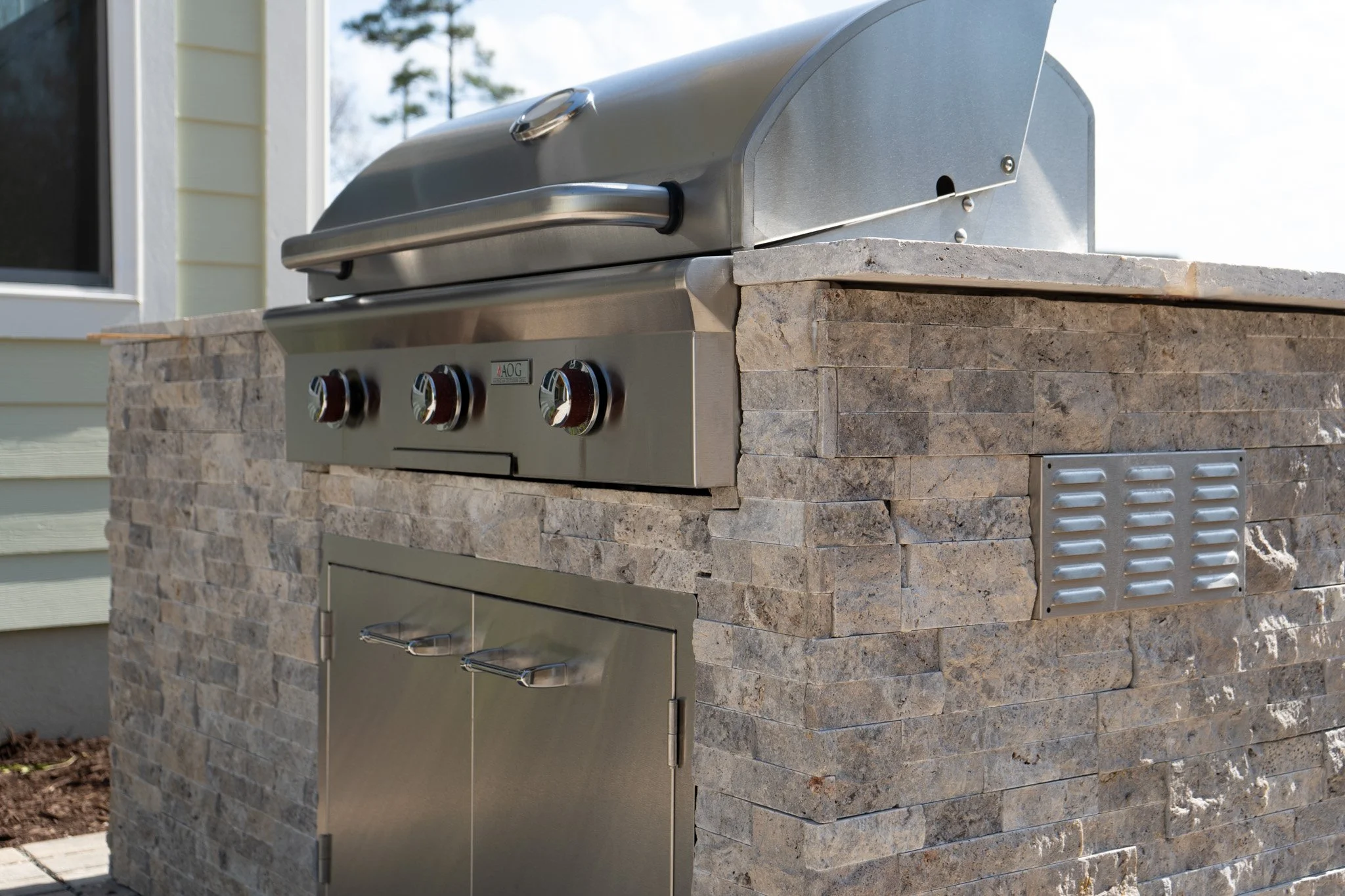
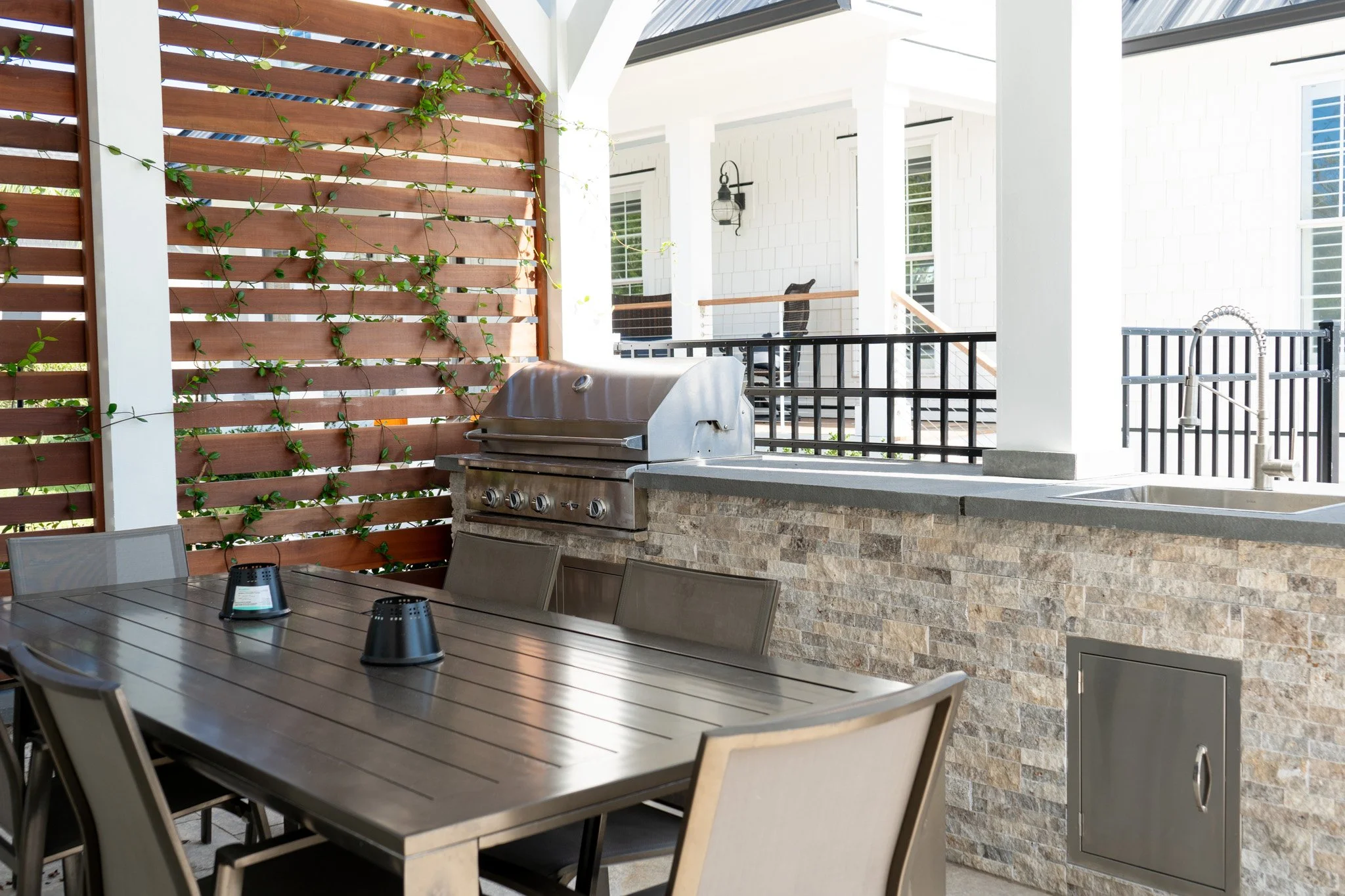
The grill is the heart of the kitchen. 316 marine-grade stainless again. Several premium grill makers offer coastal or marine lines specifically for this reason. A standard 304 grill will develop surface rust at the beach within a couple of seasons, and the burners and igniters go not long after.
The same applies to refrigerators, side burners, sinks, and drawers. Outdoor-rated appliances are not automatically coastal-rated. Ask.
Cabinet Structure
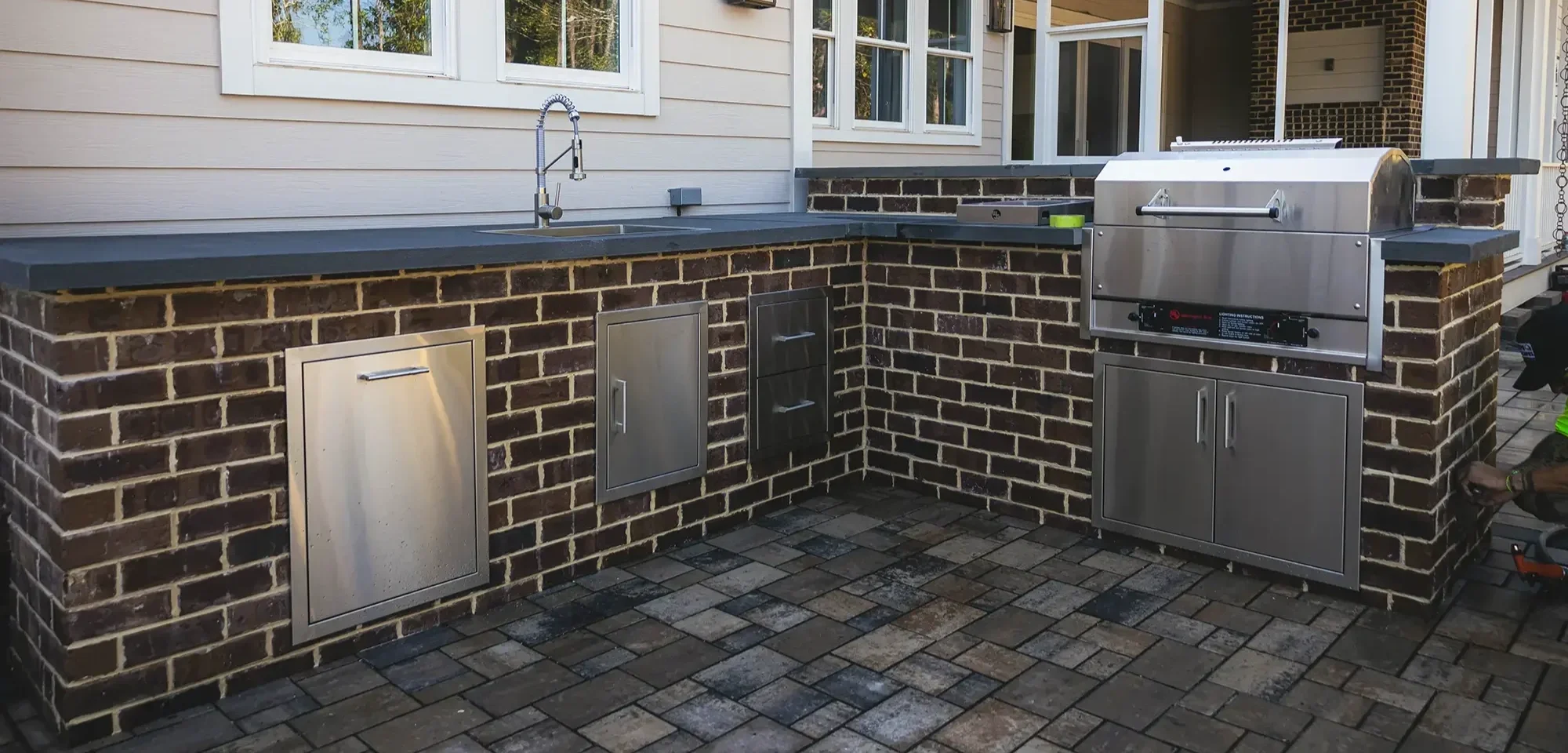
The frame under the countertop is what you don't see and what matters most.
Concrete block is the traditional choice and holds up well when faced with stone. It's heavy, so the patio base beneath it has to be built for the load, which on sandy soil means extra attention. Our guide to why patios sink in Wilmington explains what's involved.
Marine-grade aluminum framing is lighter, doesn't rust, and goes together quickly. It's what we use on most elevated decks and on properties where weight is a concern.
Steel stud framing is common inland and should be avoided on the coast. Even galvanized steel pits and rusts behind the finish once salt finds a seam.
Wood framing is a no. It will rot in our humidity regardless of what it's wrapped in.
Countertops
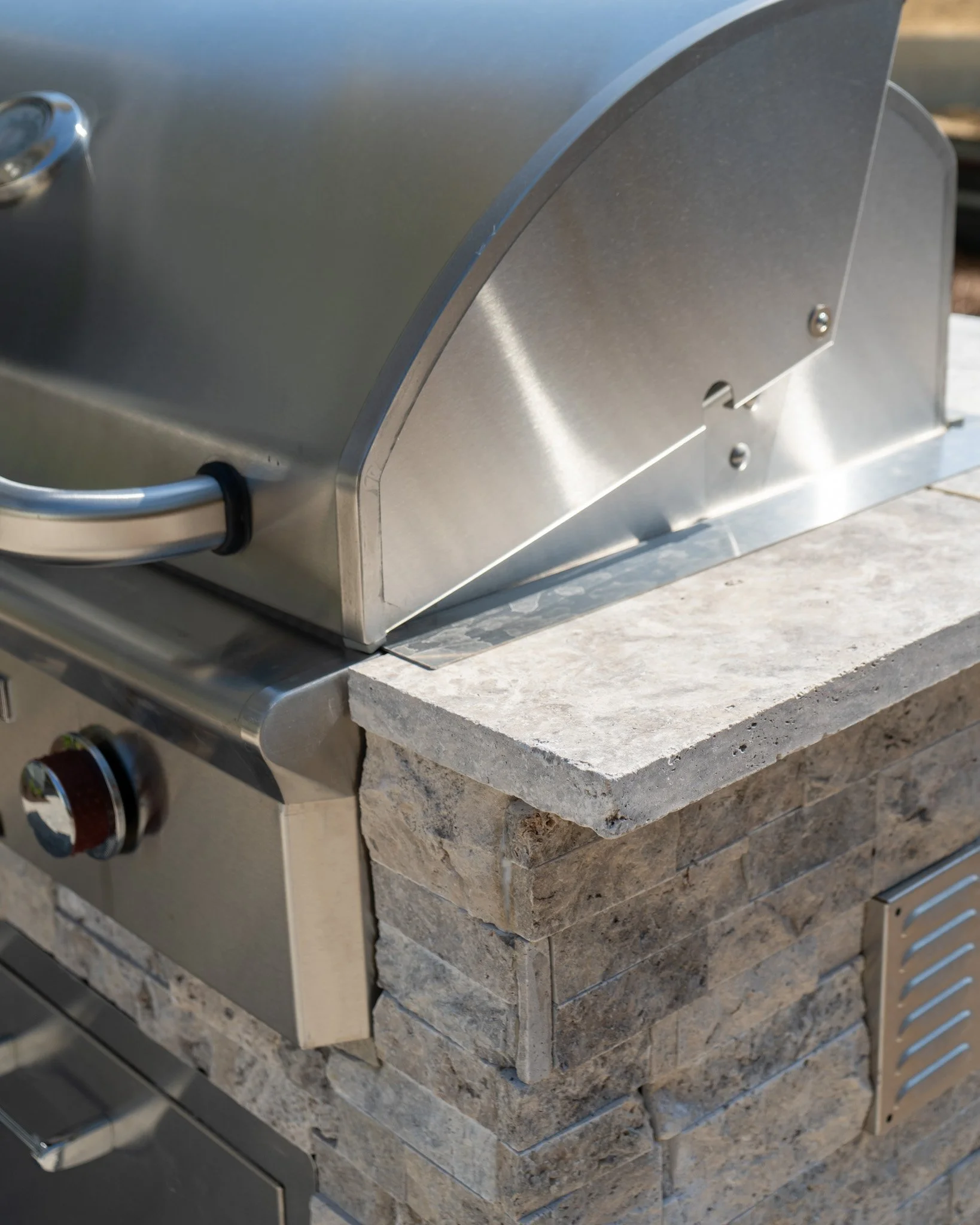
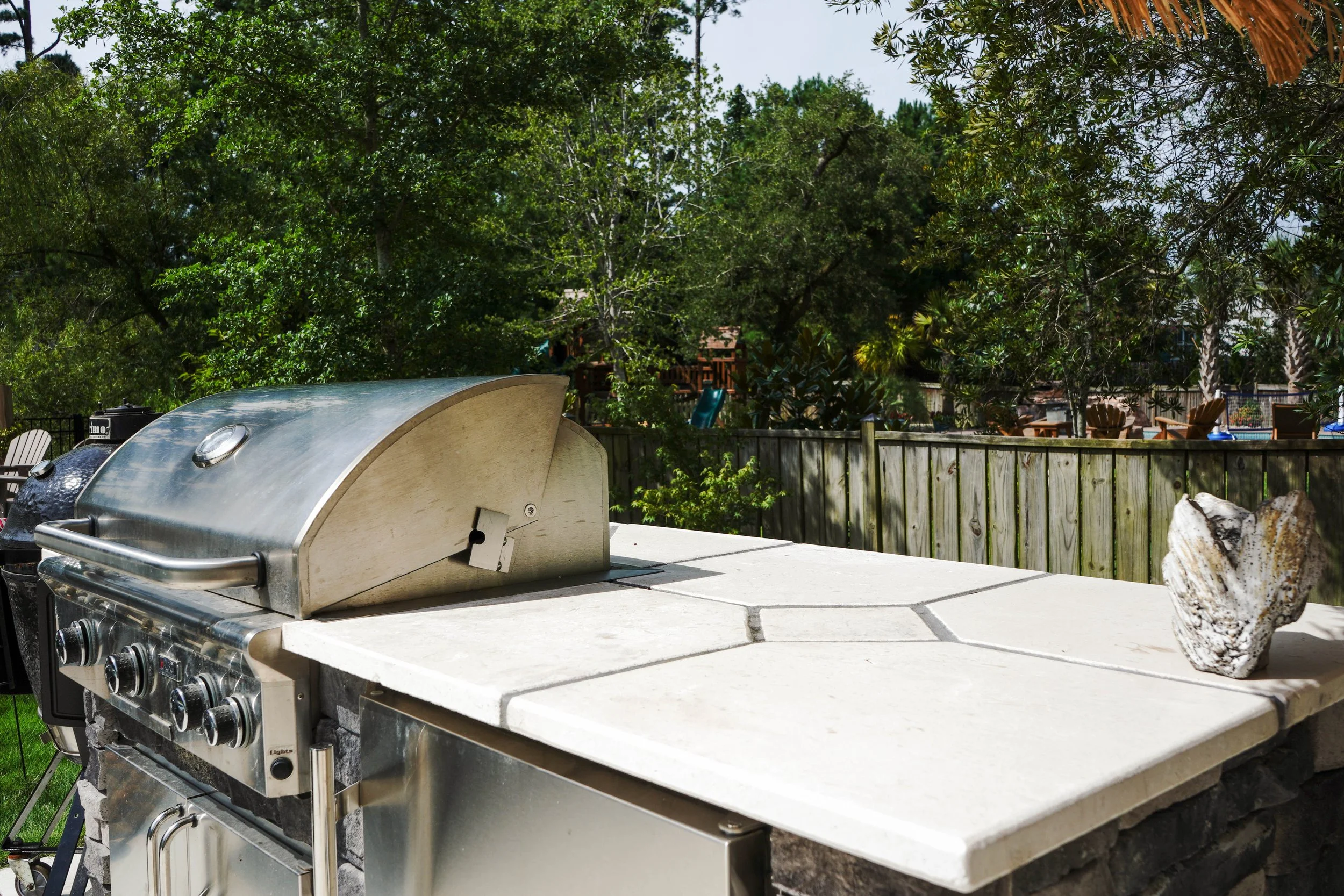
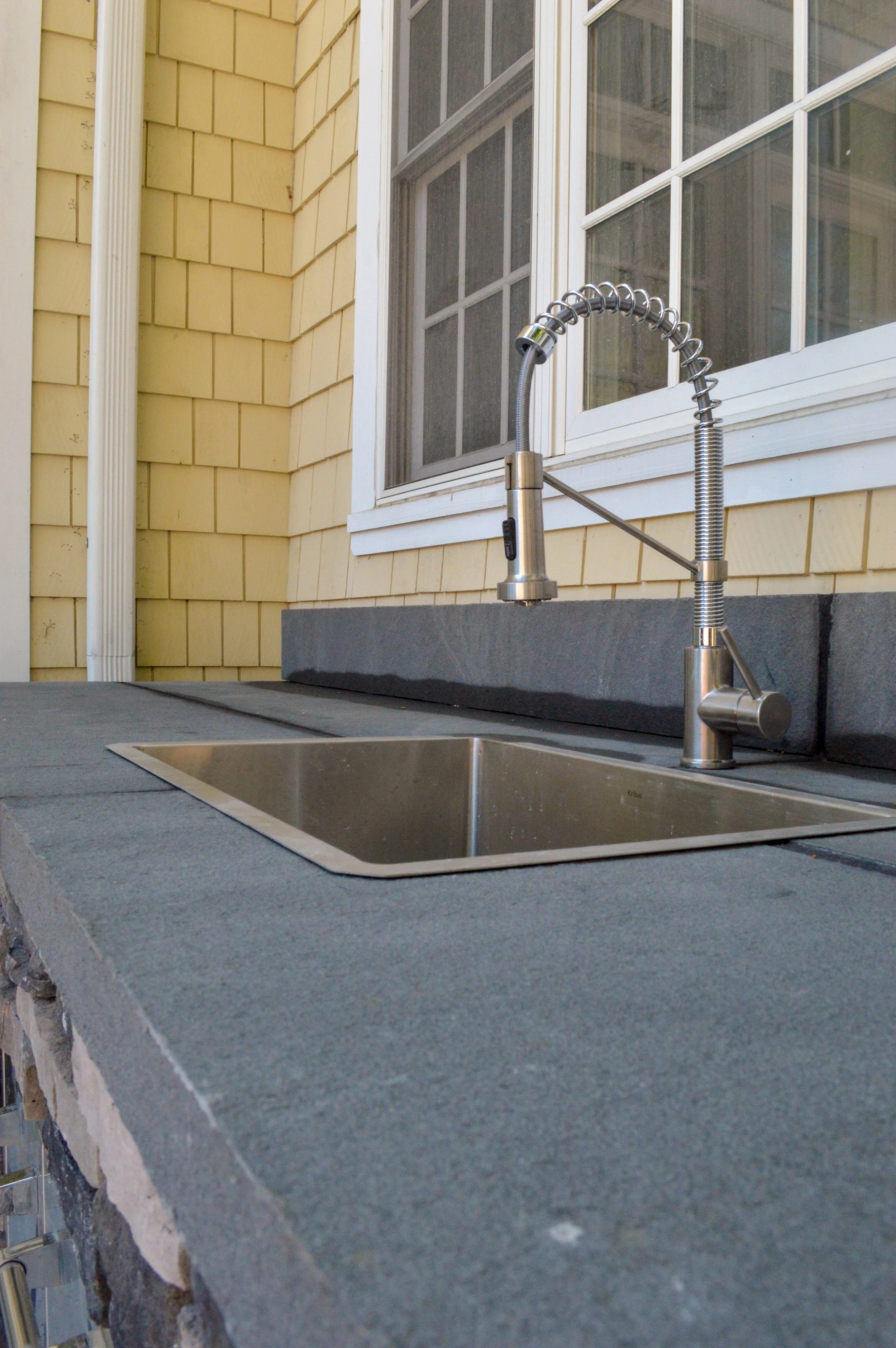
Granite is the coastal standard. Dense, heat-resistant, and nearly impervious to salt. Choose a honed or leathered finish rather than high polish to reduce glare and hide water spots.
Concrete countertops look fantastic in modern designs and can work, but they must be properly sealed and resealed every year or two, or salt and oil will stain them.
Porcelain slab is the premium 2026 option. Zero porosity, no sealing, won't fade or stain, and comes in finishes that mimic marble and stone. Higher cost, lowest maintenance.
Tile is fine for vertical surfaces but a poor countertop choice here. Grout lines absorb salt and grease and discolor.
Cladding and Finish
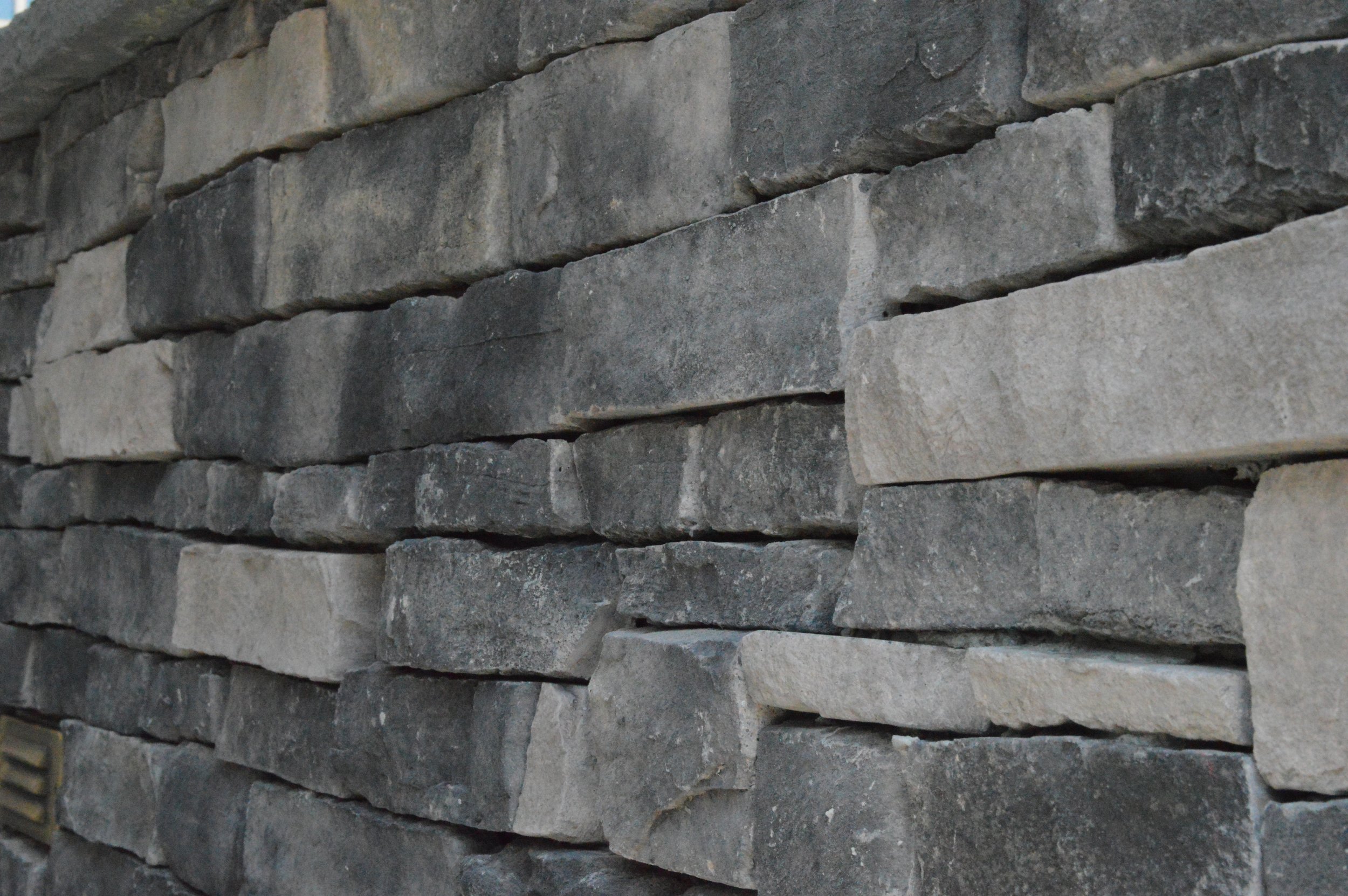
Natural stone veneer is the most durable finish and the one we recommend for exposed sites.
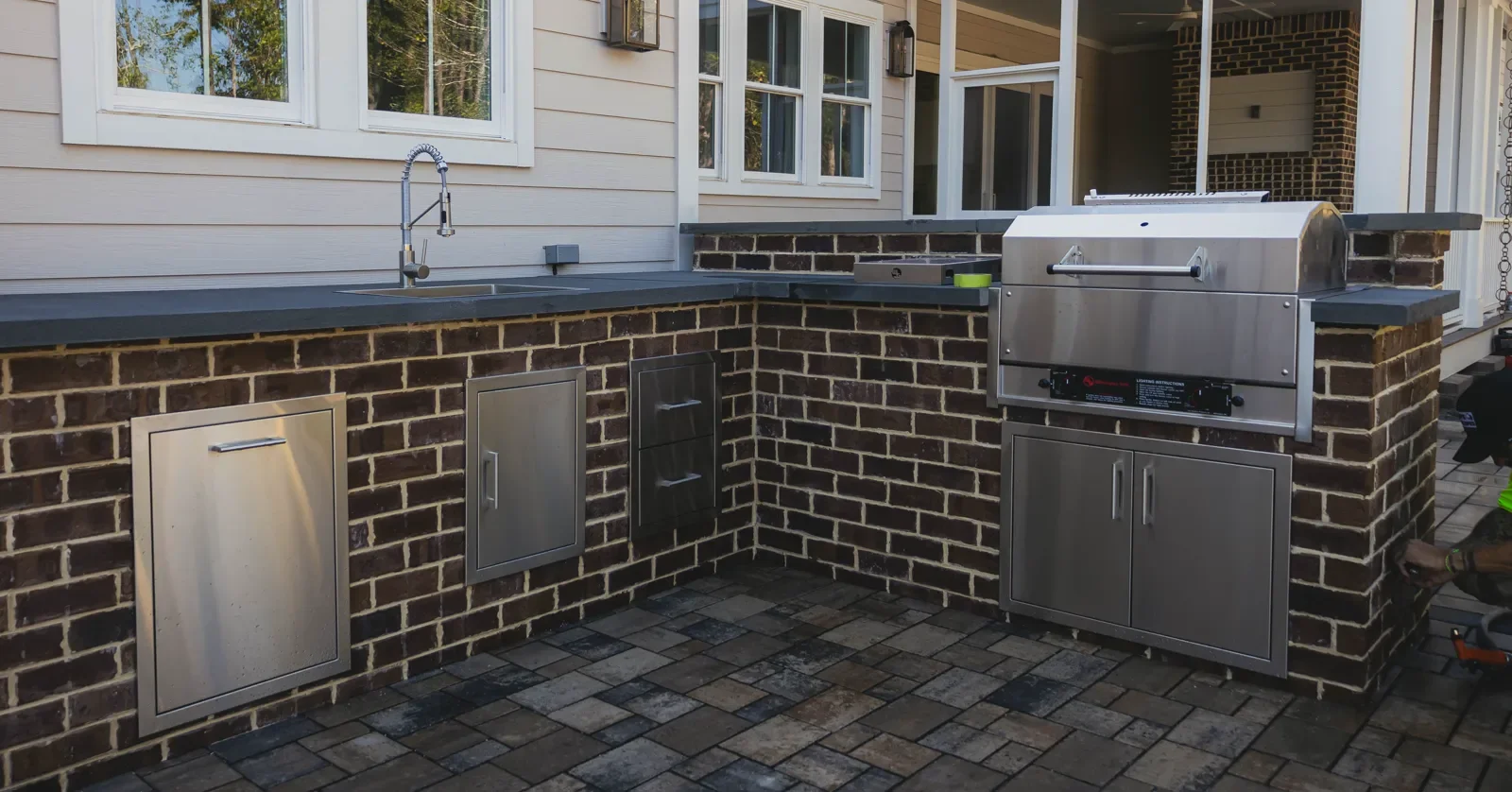
Brick holds up well and suits traditional homes downtown and in older neighborhoods.
Stucco needs the same caveats as fire pits. Use a coastal-rated acrylic finish and expect to maintain it.
Composite and PVC trim can be useful for accent panels and never rot, though cheaper versions can fade.
Roofs, Pergolas, and Shade
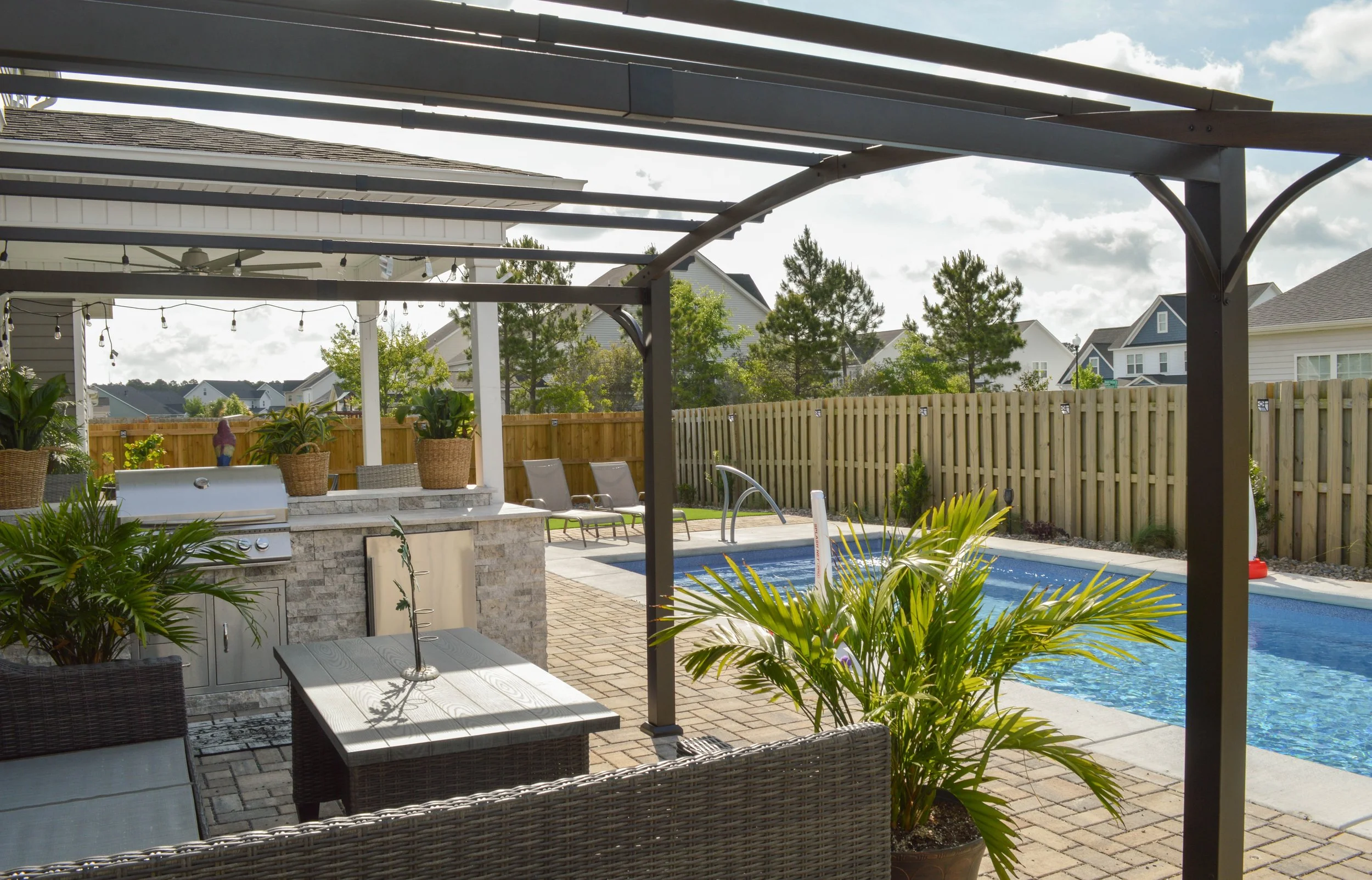
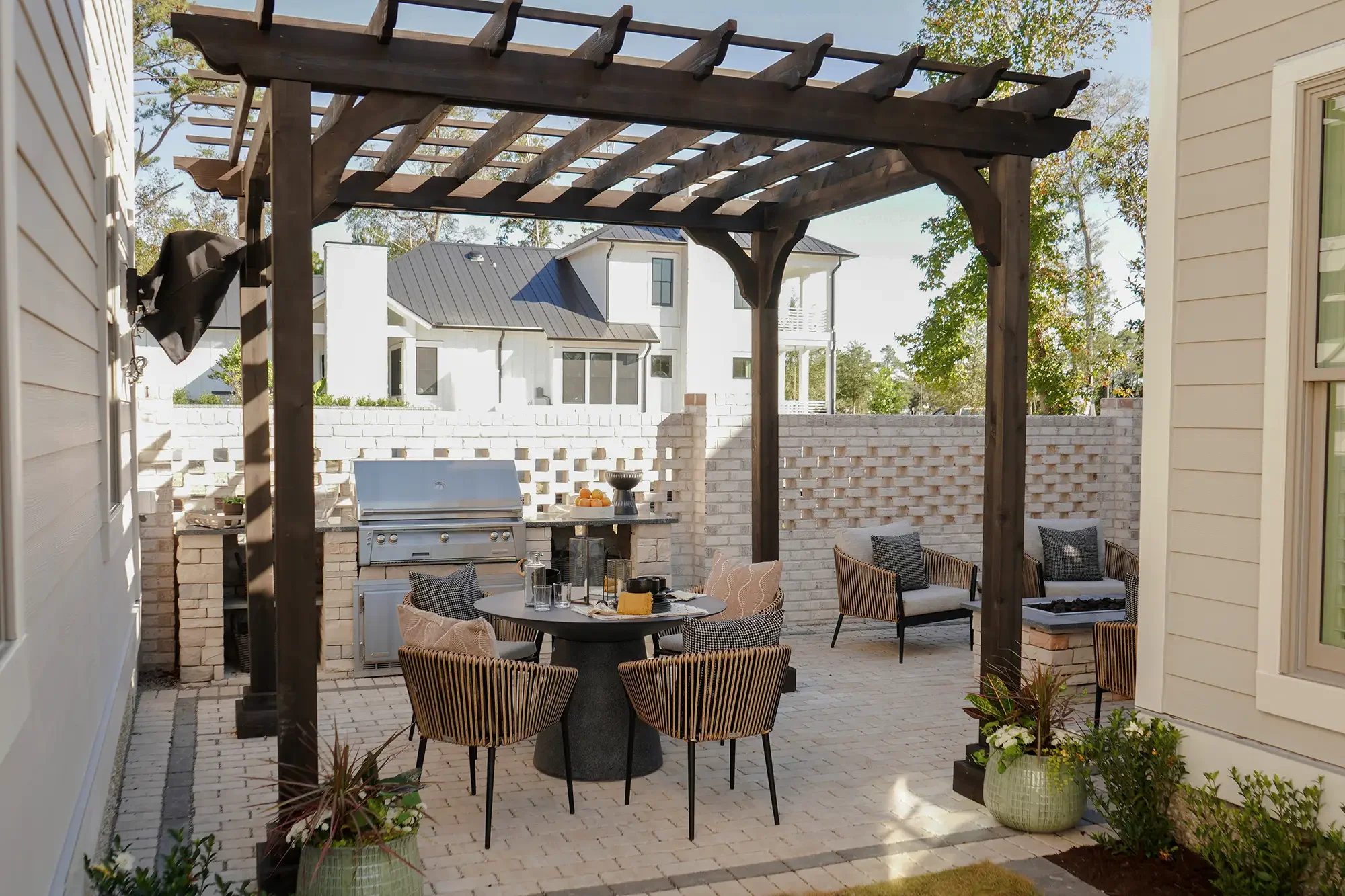
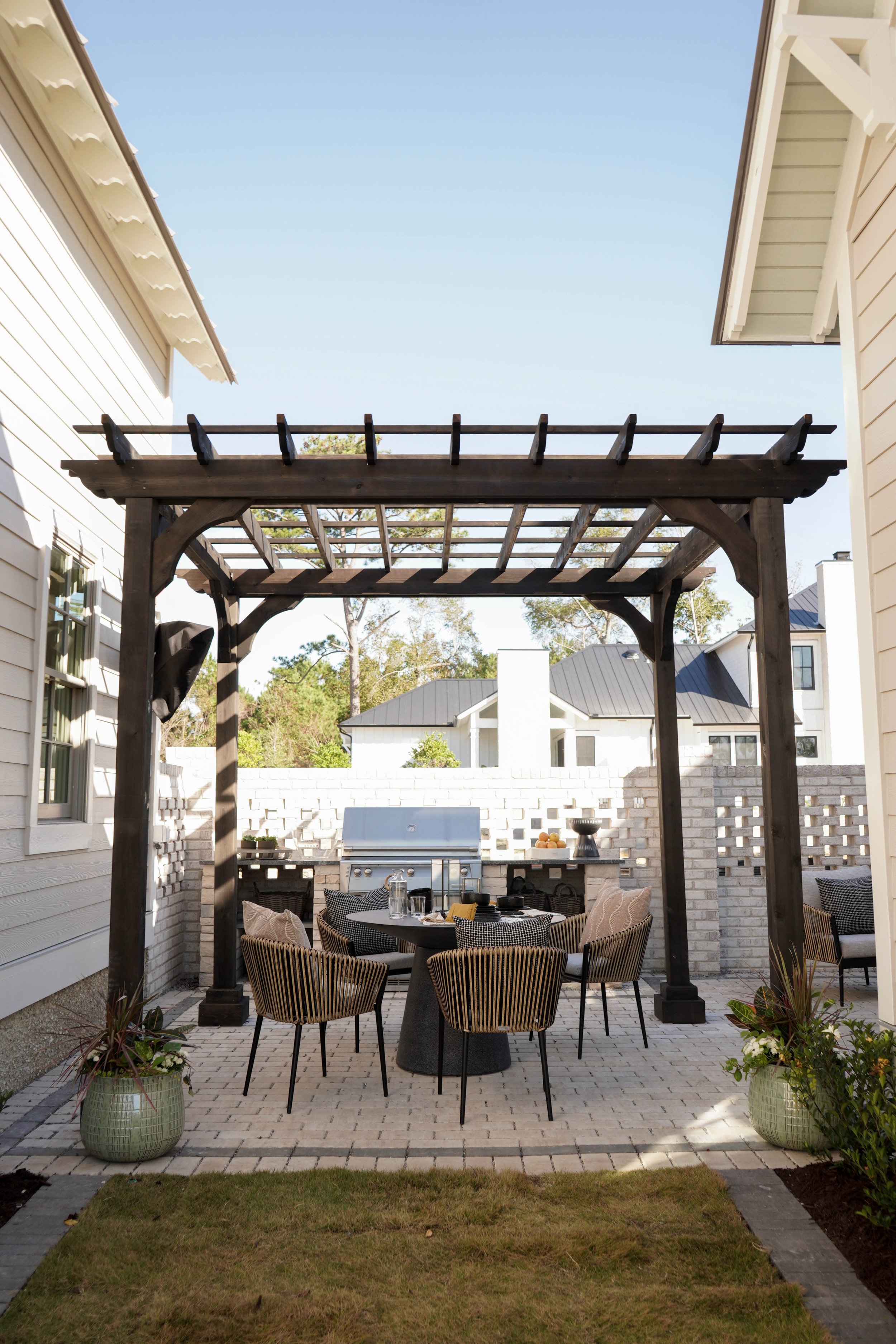
Shade makes an outdoor kitchen usable in July. For structures on the coast, we recommend pressure-treated or cedar posts wrapped in PVC or fiber-cement, aluminum pergolas with a marine-grade finish, or fully roofed structures tied into the house. All fasteners, brackets, and hangers should be stainless or hot-dipped galvanized rated for coastal exposure, and anything within reach of salt spray should be stainless.
Permits, HOAs, and Setbacks
A few things to sort out before you build:
Gas lines need a licensed plumber and a permit. Natural gas is available in many Wilmington neighborhoods but not all beach areas, so propane is often the answer east of the bridge.
Fire pit placement should respect setbacks from the house, fences, and property lines. Open-flame rules vary by municipality, and the beach towns have their own ordinances.
HOA review. Landfall, Figure Eight, Porters Neck, and most newer communities require architectural approval for outdoor structures. We prepare drawings for that process as part of design.
CAMA. On waterfront lots, outdoor kitchens and fire pit patios count toward impervious surface limits in the shoreline zone. Our guide to permeable pavers in Wilmington covers those rules.
The Quick Coastal Materials Checklist
| Component | Use This | Avoid This |
|---|---|---|
| Fire pit burner | 316 marine stainless | 304 stainless, painted steel |
| Fire pit surround | Natural stone, quality precast | Corten, powder-coated steel |
| Grill and appliances | 316 marine or coastal-rated line | Standard 304 outdoor grills |
| Cabinet frame | Concrete block, marine aluminum | Steel studs, wood |
| Countertop | Granite, porcelain slab | Tile, unsealed concrete |
| Cladding | Stone veneer, brick | Standard stucco without coastal finish |
| Fasteners | Stainless, coastal-rated galvanized | Standard zinc or steel |
Build It for the Coast
Fire pit season is here. If you want to be enjoying yours by Thanksgiving, now is the time to start.
Ready to build an outdoor space that lasts at the beach? Contact our Wilmington team for a free design consultation.